Insulation Company in March Air Force Base, CA
Blown in insulation solves the two problems March Air Force Base homes face most: attics that bake under inland heat and older military housing with almost no thermal barrier to begin with. We work across both sides of 92551, the base-era structures and the surrounding Moreno Valley tract builds, so we know how different the insulation needs are from one street to the next. Call (855) 798-0822 for a free estimate. We’ll assess what’s there now and recommend by performance, not by brand contract.
Why March Air Force Base Homes Are Different
The housing stock around March Air Force Base splits into two distinct generations. On the installation itself, you’ll find post-war military housing and mid-century support buildings, many of which have minimal original insulation and flat or low-slope roofs. Around the perimeter and into the adjacent 92551 tracts, you get fast-built 1980s to 2000s stucco homes that went up when energy codes were looser than they are today.
Climate drives the work. This is inland Southern California at the base of the Box Springs and Badlands hills, so summers are brutally dry and attics can hit 140 degrees or higher. Strong afternoon winds kick up dust that finds its way into every gap in the building envelope. That combination means air sealing and heat-reflective attic insulation matter more here than heavy cold-weather insulation ever would. We also see a lot of insulation that’s been disturbed or compacted where aging roofs have been re-penetrated over the years, especially on the older base structures.
Access matters too. Contractors doing work inside the installation have to coordinate with base security, which changes scheduling and logistics. We’re familiar with that process and plan for it from the first estimate.
Our Main March Air Force Base Services
Most March Air Force Base homeowners call us about two things: rebuilding attic insulation in older homes, and sealing the building envelope with spray foam where air leaks and aircraft noise are a factor. Here’s how each works in this area.
Attic Insulation in March Air Force Base
For 1950s and 60s base housing with thin or settled insulation, the fix usually involves removing what’s degraded, air sealing penetrations, and installing a proper thermal barrier. Many of these homes have flat or low-slope roofs, so the attic space is shallow and needs a careful approach. For the newer stucco tracts around the base, we typically add insulation to bring R-values up to current code and cut cooling costs during the long inland summer. Attic Insulation in March Air Force Base covers this work in full.
Spray Foam Insulation in March Air Force Base
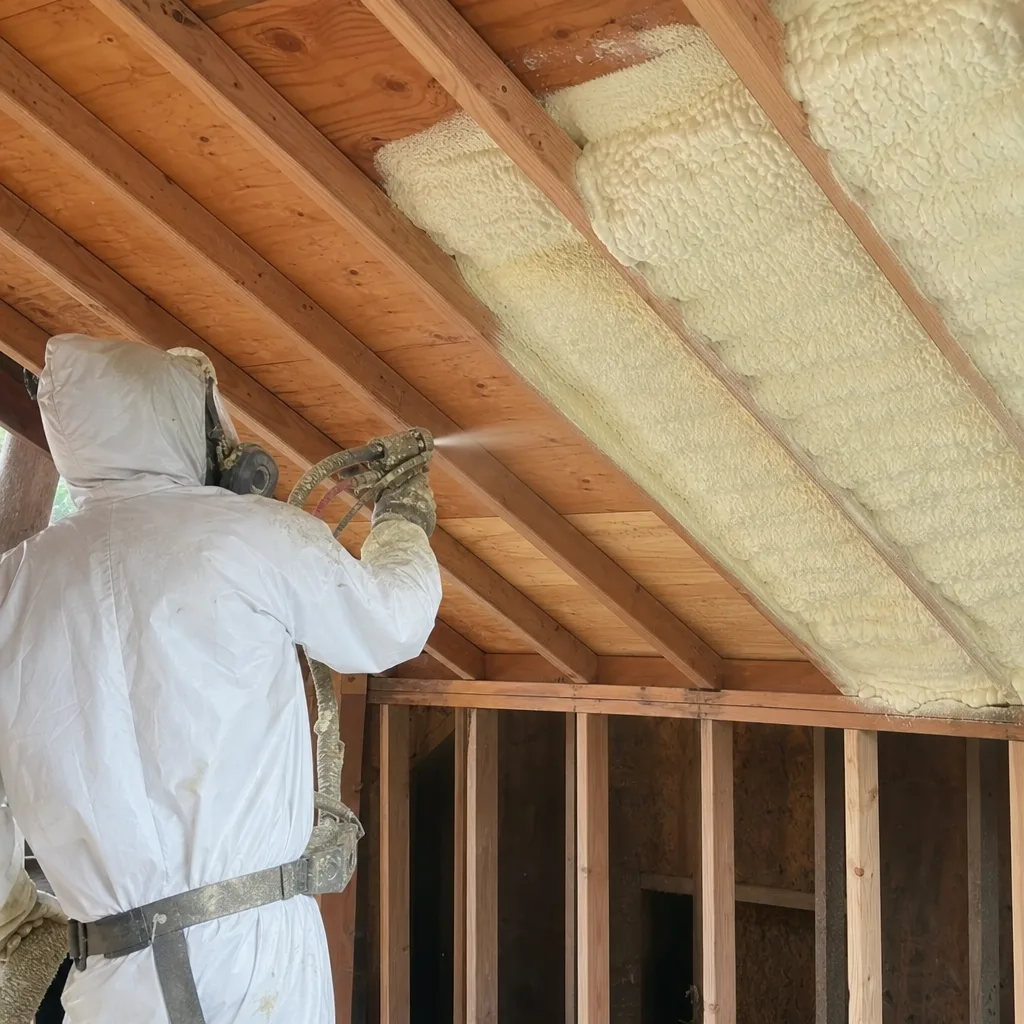
Spray foam earns its keep on the March Air Force Base perimeter, where aircraft noise and dusty wind are constant. Open-cell foam in attic rooflines and closed-cell foam at rim joists and band boards create an air seal that fiberglass alone can’t match. It also stabilizes older framing in mid-century structures. For homes directly under the flight path, the noise reduction is something owners notice the first week. Spray Foam Insulation in March Air Force Base explains the two foam systems and where each fits.
What happens when you call
- 1
A real person answersNo phone trees — you reach a local pro.
- 2
You get an upfront price rangeHonest numbers before anyone is dispatched.
- 3
A background-checked tech heads outLicensed & insured, dispatched right away.
- 4
You approve before work beginsNothing starts until you say go.
Blown In Insulation in March Air Force Base
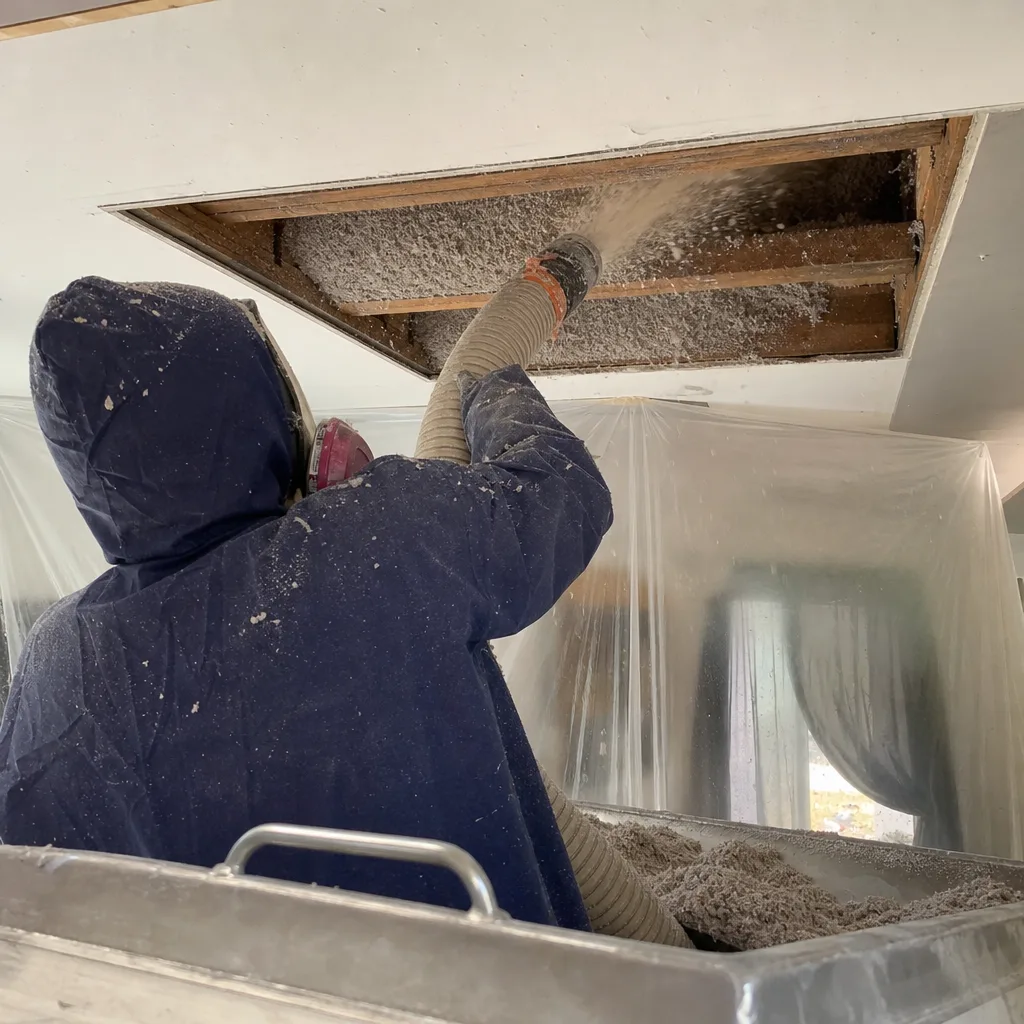
Blown in insulation is the most common retrofit we recommend in March Air Force Base because it’s fast, it fills irregular and shallow attic cavities well, and it brings a measurable improvement to houses that have baked through decades of inland summers with thin or no thermal barrier. Many of the older base-era homes have attics we can improve in a single day using Blown In Insulation, and the newer stucco tracts respond just as well when we top off settled fiberglass or add coverage over existing batts. Wind-driven dust is a constant near the base, so we always pair this work with air sealing at penetrations.
Cellulose Insulation
Signs you need it
Your attic insulation is thin, patchy, or settled below the top of the joists, and rooms directly under the attic get noticeably hot by mid-afternoon.
What it costs in March Air Force Base
Blown in cellulose runs $1.20 to $2.20 per square foot, with typical attic jobs in 92551 landing between $1,800 and $3,400 before any air sealing add-ons.
How we do it
We prep the attic, air seal the obvious bypasses, then dense-pack or loose-fill the cellulose to the specified R-value using a calibrated blower, finishing with an inspection of coverage depth.
Blown In Fiberglass Insulation
Signs you need it
Existing fiberglass batts are compressed, dusty, or uneven across the attic floor, leaving hot and cold spots at the ceiling level throughout the home.
What it costs in March Air Force Base
Blown in fiberglass ranges from $0.80 to $1.80 per square foot, so a new build or full attic retrofit in March Air Force Base typically runs $1,200 to $2,700.
How we do it
We remove or level the existing material as needed, seal penetrations, then blow loose-fill fiberglass to the target depth and R-value with a controlled machine setting and spot-check coverage.
What Blown In Insulation Costs in March Air Force Base
| Item | Typical range in March Air Force Base |
|---|---|
| Blown in cellulose (attic retrofit) | $1,800 – $3,400 |
| Blown in fiberglass (attic retrofit) | $1,200 – $2,700 |
| Air sealing add-on (penetrations, top plates) | $400 – $1,100 |
How long does blown in insulation take in March Air Force Base?
Most attics in 92551 are finished in one working day. Homes with deep attics or extensive air sealing needs may run a second day, and we’ll tell you that at the estimate.
Does blown in insulation settle in March Air Force Base heat?
It should not if installed to the correct density. We calibrate for the material and the target R-value so coverage stays consistent through the hot summers that hit March Air Force Base attics hardest.
Brands We Service in March Air Force Base
We stock or order from Owens Corning, Johns Manville, Demilec, and GreenFiber, among our eight-brand lineup. Parts and materials come from our Ontario inventory, so most March Air Force Base jobs are supplied within one to three business days. Learn more on our brands page.
Pricing for Insulation Company in March Air Force Base, CA
| Service | Typical range in March Air Force Base |
|---|---|
| Blown in cellulose (attic) | $1,800 – $3,400 |
| Blown in fiberglass (attic) | $1,200 – $2,700 |
| Spray foam (open-cell, attic roofline) | $2,400 – $5,200 |
| Spray foam (closed-cell, band boards) | $1,800 – $3,800 |
| Attic air sealing | $400 – $1,100 |
Prices in March Air Force Base push upward when attic access is tight, when we’re working inside the installation and need base security coordination, or when old material has to be fully removed before new insulation goes in. Every quote is fixed and written before we start, with no surprise line items at the end.
Neighborhoods We Serve in March Air Force Base
We cover the full 92551 area, from the base housing and support structures inside the installation to the civilian tracts around it. Typical response time is same-week, and many estimates happen within two business days of your call.
- March Air Reserve Base housing
- Moreno Valley tracts adjacent to the base
- Lake Perris area
- Towngate
- Sunnymead Ranch
Service Area – Cities Near March Air Force Base
We also serve the surrounding inland communities. Homeowners in Woodcrest, CA and Riverside, CA contact us for the same blown in, spray foam, and attic work we do across the base. To the west, Colton, CA and Rubidoux, CA are within our regular service loop as well.
Serving March Air Force Base, CA — Our Local Coverage Area
We’re based in the March Air Force Base area and know this community well. Use the map below to see our service coverage — if you’re nearby, we can almost certainly help.
FAQs About Insulation Company in March Air Force Base
Most estimates in 92551 are scheduled within two business days, and blown in attic work is often completed the same week. Jobs inside the installation may add a day or two for base access coordination. Call (855) 798-0822 and we’ll give you a specific window.
Yes, any work inside March Air Reserve Base requires coordination with base security or housing management. We handle that as part of scheduling. For off-base civilian homes in 92551, no special approval is needed.
It depends on location. Homes directly under the flight path benefit fastest from spray foam’s air-sealing and sound-dampening. Homes farther out typically get more from attic insulation and air sealing against heat and dust. We’ll assess both during the estimate. Call (855) 798-0822 for a free evaluation.
For blown in insulation, attic retrofits, or spray foam in March Air Force Base, call (855) 798-0822. Estimates are free, pricing is upfront, and the recommendation always follows what your home actually needs.
What happens when you call
- 1A real person answersNo phone trees — talk to a local insulation pro.
- 2You get an upfront price rangeHonest numbers before anyone is dispatched. No surprises.
- 3A background-checked tech heads outLicensed & insured, typically within 60-minute.
- 4You approve before work beginsNothing starts until you say go.
What March Air Force Base Customers Say
"Installed baffles at the soffits so the new insulation didn't block the ventilation, which the previous contractor apparently never considered."
— Dev Patel"Spray foam in the rim joists in the basement. The cold floors above them are gone."
— Sami Mansour"Work is good and the house is noticeably more comfortable. There was insulation debris left in the hall closet under the attic access that I had to clean up."
— Andres Delgado