Insulation Company in Fontana, CA
Blown in insulation solves Fontana’s most persistent attic problem: builder-grade batts that slump and compress after 30 years of 110°F attic heat, leaving gaps that let cooled air escape all summer. Most homes across the 92335, 92336, and 92337 tract belts were built between the 1980s and early 2000s with R-11 or R-13 fiberglass batts, and that material simply wasn’t designed for Fontana’s heat cycling. Rock Solid Insulation brings three installation methods and eight product brands to every Fontana job, so the recommendation follows your home’s actual conditions, not the one product we happen to stock. Call (855) 798-0822 for a free estimate.
Why Fontana Homes Are Different
Fontana sits in the hot inland valley east of Los Angeles, where summer highs routinely pass 100°F and attic temperatures push well beyond that. That sustained heat cycling degrades fiberglass batts far faster than in coastal LA – the binders break down, the material settles, and the R-value drops. Under-insulated ceilings matter here year-round: cooling season runs from May through October, but winter nights still dip into the 40s often enough that thermal gaps show up in heating bills too.
The second Fontana-specific factor is dust. The Santa Ana corridor pushes fine silt through soffit vents, and years of that infiltration leaves visible gray lines across attic insulation – a tell that the material has been doing more filtering than insulating. In the 92336 and 92337 tract belts especially, we routinely open attics where the top layer of batting looks intact but the underside is packed with dust and compressed to half its original loft. Loose fill insulation actually handles this environment better than batts because it settles into a monolithic layer with no seams for dust-laden air to push through.
Housing stock across Fontana is dominated by post-1950s stucco-on-wood-frame construction: low-pitch roofs, standard vented attics, and ceiling joists on 16 or 24-inch centers. That uniformity means most jobs go quickly, but it also means the original insulation was a builder’s cheapest line item, not a performance decision. Older ranch homes near the historic downtown and Kaiser Steel-era neighborhoods often have even less – sometimes 2×4 ceiling cavities with nothing but a thin layer of rock wool from the 1960s.
Our Main Fontana Services
Fontana homeowners call us most about two things: attics that need a full thermal assessment and replacement, and spray foam for airtight sealing against heat and dust. Both have dedicated Fontana pages below.
Attic Insulation in Fontana
Attic work in Fontana starts with a real inspection, not a quick look from the hatch. We measure existing R-values, check for compressed or dust-loaded batts, and map the places where conditioned air escapes – typically around recessed lights, attic access panels, and bathroom fan housings. For 1980s-2000s tract homes with settled R-11 or R-13, the fix usually means removing the old material and blowing in fresh insulation to a consistent depth. For older ranches near downtown Fontana, it often means air sealing first, then insulating. We carry Owens Corning, Johns Manville, Knauf, and CertainTeed fiberglass plus Rockwool mineral wool and GreenFiber cellulose, so the recommendation is driven by your home’s construction, not a brand contract. See Attic Insulation in Fontana for the full breakdown.
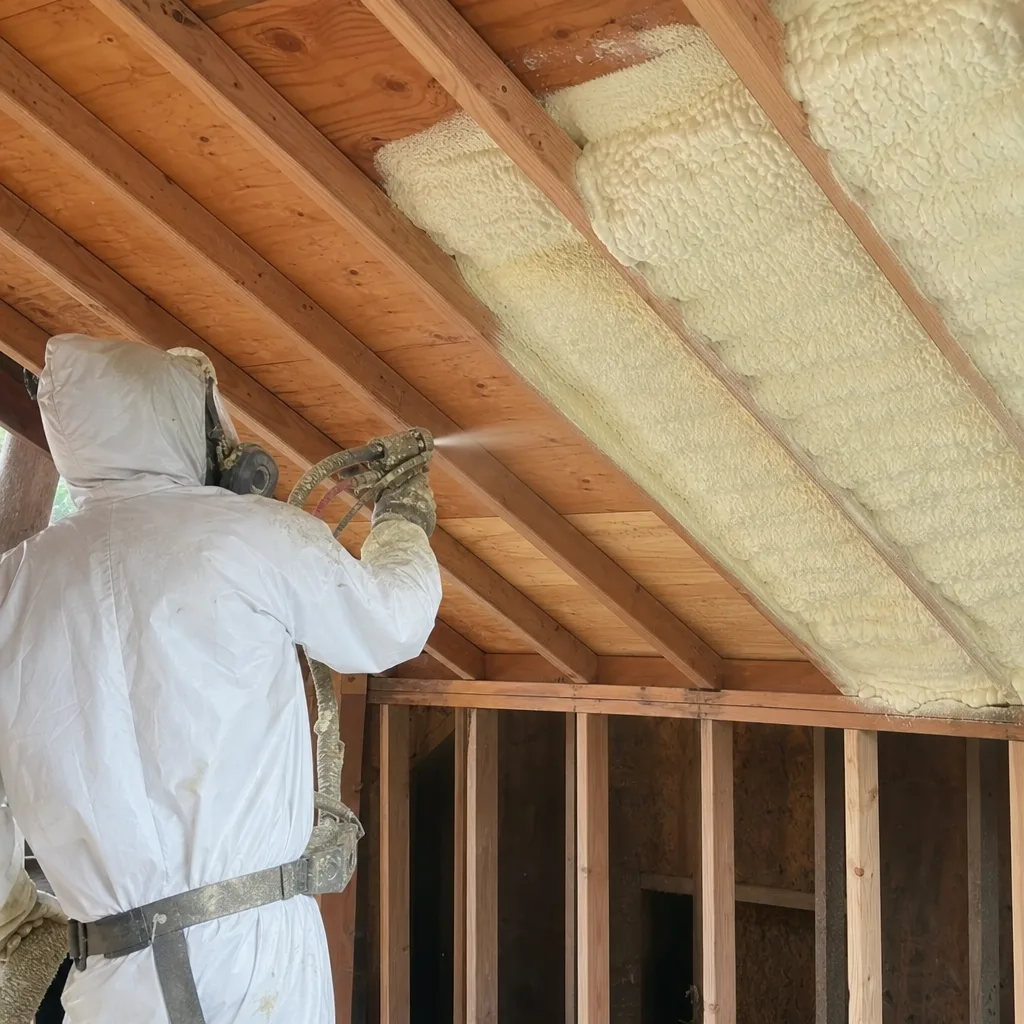
Spray Foam Insulation in Fontana
Spray foam earns its cost in Fontana by doing what batts and loose fill cannot: it air seals. In the 92336 and 92337 tract belts, air leaks through top plates, can lights, and duct chases pull in dust and heat all summer. Closed-cell foam from Icynene or Demilec installed at the roofline creates an airtight, insulated envelope that blocks both. It’s the right call for attics with HVAC equipment, homes where the attic is used for storage, or homeowners who want the dust infiltration stopped rather than just slowed. Not every Fontana attic needs foam – vented attics with clean air movement do fine with loose fill – but when air sealing is the goal, foam is the tool. Full detail at Spray Foam Insulation in Fontana.
What happens when you call
- 1
A real person answersNo phone trees — you reach a local pro.
- 2
You get an upfront price rangeHonest numbers before anyone is dispatched.
- 3
A background-checked tech heads outLicensed & insured, dispatched right away.
- 4
You approve before work beginsNothing starts until you say go.
Blown In Insulation in Fontana
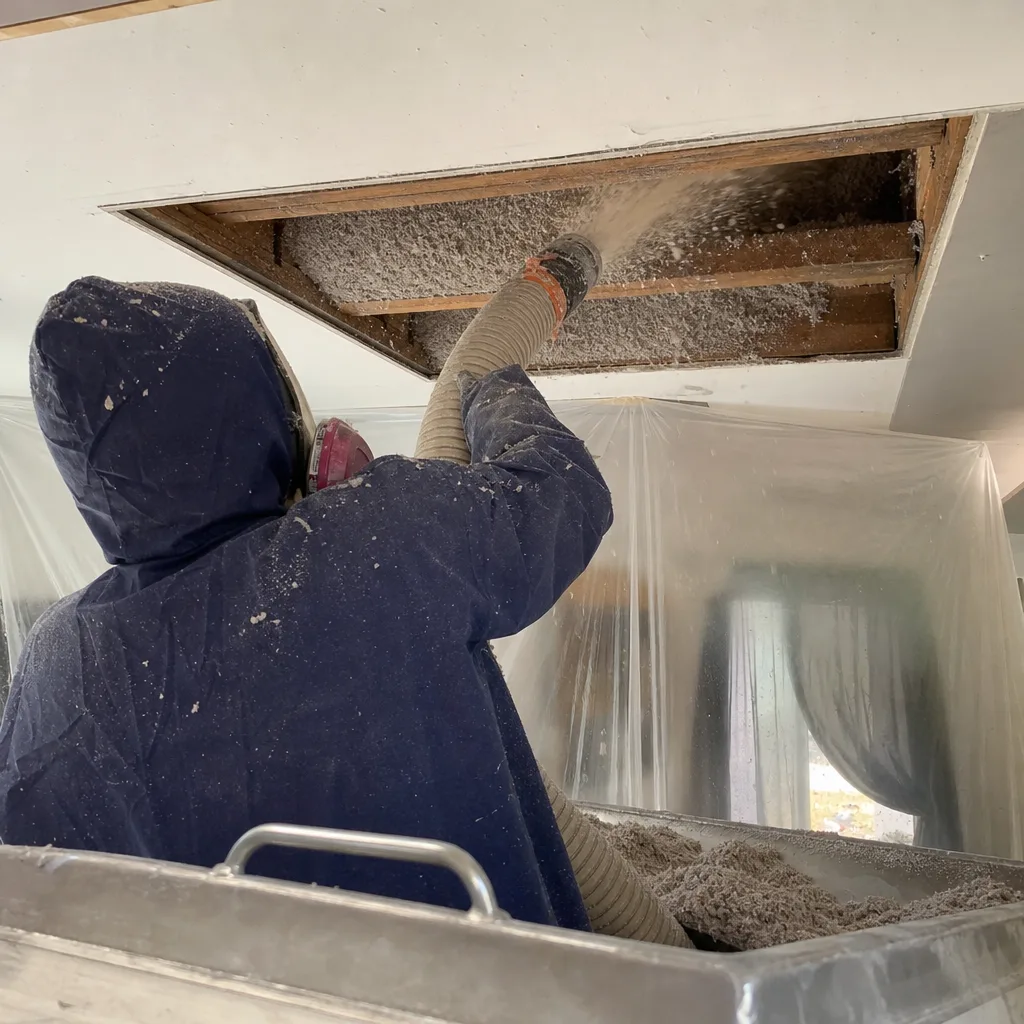
Blown in insulation is the workhorse solution for Fontana’s tract-home attics, and for good reason. It installs fast, covers irregular spaces completely, and creates a seamless thermal layer that doesn’t leave the gaps batts do – especially important in the 92335/92336/92337 belts where original R-11 and R-13 batts have compressed under decades of attic heat and dust infiltration. Loose fill conforms to whatever your attic looks like: odd joist spacing, low-clearance eaves, HVAC ducts crossing the floor. We install both fiberglass and cellulose depending on the attic’s condition and the homeowner’s goals. Read more about the method on our Blown In Insulation hub.
Cellulose Insulation
Signs you need it
Your attic has settled batts, dust lines along the insulation surface, or you want higher recycled content and better sound damping than fiberglass offers.
What it costs in Fontana
Blown-in cellulose in Fontana typically runs $1,600 to $2,800 for a standard 1,200 to 1,600 sq ft attic, depending on target R-value and existing material removal.
How we do it
We remove the old material where needed, air seal the leak points, then blow GreenFiber cellulose to a consistent depth using a calibrated machine that keeps the density even across the whole attic floor.
Blown In Attic Insulation
Signs you need it
Rooms directly under the attic get hotter than the rest of the house by mid-afternoon, or your energy bills rise every summer while the AC runs longer each year.
What it costs in Fontana
Blown-in attic insulation over an existing layer costs $1,000 to $1,900 for the average Fontana tract home, while full removal and reinstall runs $2,000 to $3,200.
How we do it
We check joist depth and existing R-value, then blow insulation to the depth that gets you to the target R-value – usually R-38 to R-49 for Fontana attics – keeping the fill consistent so there are no thin bands.
Blown In Cellulose Insulation
Signs you need it
You want the highest recycled content of any blown-in option and a material that resists air movement better than loose fiberglass in Fontana’s dust-prone attics.
What it costs in Fontana
Blown-in cellulose for standard Fontana attics costs $1,400 to $2,400, with deeper fills toward R-49 running $2,200 to $3,000 depending on access and prep.
How we do it
We typically use GreenFiber blown cellulose, which packs tighter than loose fiberglass and stays in place without settling into thin spots over the decades.
Loose Fill Insulation
Signs you need it
Your attic has shallow batts, open joist bays, or hard-to-reach corners where batt installation left gaps.
What it costs in Fontana
Loose fill fiberglass for a standard Fontana attic falls between $1,100 and $2,100, with costs rising when access is tight or existing material needs removal first.
How we do it
We blow loose fiberglass – typically Owens Corning or Johns Manville – into the joist bays until the material depths hit the target R-value, paying close attention to the eaves and around chimneys where heat escapes fast.
What Blown In Insulation Costs in Fontana
| Item | Typical range in Fontana |
|---|---|
| Blown-in fiberglass (new attic, standard tract home) | $1,600 – $2,800 |
| Blown-in cellulose (full removal and reinstall) | $2,000 – $3,200 |
| Top-up over existing insulation | $1,000 – $1,900 |
Is blown in insulation worth it in Fontana?
Yes, especially in 1980s-2000s tract homes where original R-11 or R-13 batts have compressed. Blown in insulation fills the thermal gaps those batts leave behind, and the improvement shows up in summer cooling bills. Call (855) 798-0822 for a free attic assessment.
How long does blown in insulation last in Fontana’s attic heat?
Cellulose and loose fiberglass both hold their R-value for decades when installed at the right density, even with Fontana’s high attic temperatures. The material doesn’t degrade from heat the way batts do. Call us for a free estimate on replacement.
Brands We Service in Fontana
We install GreenFiber cellulose, Owens Corning and Johns Manville fiberglass, and Knauf products across Fontana. Our Ontario facility stocks the common materials locally, so most Fontana jobs are scheduled within a few business days. See our brands for the complete lineup.
Pricing for Insulation Company in Fontana, CA
| Service | Typical range in Fontana |
|---|---|
| Blown-in fiberglass attic insulation | $1,600 – $2,800 |
| Blown-in cellulose attic insulation | $2,000 – $3,200 |
| Attic insulation top-up | $1,000 – $1,900 |
| Attic insulation removal | $800 – $1,500 |
| Air sealing | $400 – $1,000 |
| Spray foam insulation (open-cell, per sq ft) | $1.50 – $2.50 |
| Spray foam insulation (closed-cell, per sq ft) | $2.50 – $3.50 |
| Blown-in wall insulation (existing walls) | $2,500 – $6,000 |
Prices in Fontana run slightly higher for two reasons: attic access is often tighter in the 1980s-era tract homes, and the dust that’s accumulated over decades means more prep work before new insulation goes in. Rock Solid Insulation gives you a written, upfront price after a free attic inspection – no add-on surprises at the end.
Neighborhoods We Serve in Fontana
Rock Solid Insulation covers all Fontana ZIP codes including 92337, 92331, 92334, and 92335. We’re in and out of most neighborhoods within a few business days of your call, and our crews know the tract layouts well enough to quote accurately from your address.
- North Fontana (92336)
- Southridge (92337)
- Downtown Fontana (92335)
- Walnut Village (92336)
- Sierra Lakes (92336)
Service Area – Cities Near Fontana
Rock Solid Insulation serves Fontana and the surrounding inland communities from our Ontario location. If you’re in Bloomington, CA, Rialto, CA, Glen Avon, CA, or Pedley, CA, we run crews there regularly and can schedule most jobs within the same week. Call (855) 798-0822 to confirm your address is in our service area.
Serving Fontana, CA — Our Local Coverage Area
We’re based in the Fontana area and know this community well. Use the map below to see our service coverage — if you’re nearby, we can almost certainly help.
FAQs About Insulation Company in Fontana
Most Fontana jobs are scheduled within three to five business days of your call. We run crews out of Ontario, which puts us 20 to 30 minutes from most Fontana neighborhoods, and we stock the common materials locally so there’s no wait on product. Call (855) 798-0822 for the next available slot.
Most attic and blown-in insulation jobs in Fontana don’t need a city permit because they’re considered maintenance of an existing home. Spray foam on the roofline can trigger building code review depending on the scope. We’ll tell you before we start if a permit applies to your project.
Yes. Fontana has several large planned communities, particularly in the 92336 area, and HOAs sometimes require notification before attic work. We’re familiar with the process and will tell you upfront if your community requires anything before we schedule the crew. Call (855) 798-0822 to get started.
What happens when you call
- 1A real person answersNo phone trees — talk to a local insulation pro.
- 2You get an upfront price rangeHonest numbers before anyone is dispatched. No surprises.
- 3A background-checked tech heads outLicensed & insured, typically within 60-minute.
- 4You approve before work beginsNothing starts until you say go.
What Fontana Customers Say
"Installed baffles at the soffits so the new insulation didn't block the ventilation, which the previous contractor apparently never considered."
— Dev Patel"Spray foam in the rim joists in the basement. The cold floors above them are gone."
— Sami Mansour"Work is good and the house is noticeably more comfortable. There was insulation debris left in the hall closet under the attic access that I had to clean up."
— Andres Delgado