
Icynene Attic Insulation in Ontario: A Homeowner’s Guide
Icynene open-cell spray foam earns its keep in three specific Ontario attic situations: unvented cathedral ceilings, tight knee-wall cavities, and attics crowded with HVAC ductwork and recessed lights. Everywhere else, you’re often paying a premium for chemistry you don’t need. If you’d rather skip the research and get a straight answer for your specific attic, call (855) 798-0822.
We pulled a half-collapsed fiberglass batt out of a 1960s ranch over in the Creekside neighborhood last month. The homeowner had been paying $400-plus summer cooling bills for years because one side of the attic was effectively uninsulated. That’s the difference between insulation that’s installed and insulation that actually performs. Icynene’s MD-R-210 open-cell foam expands to roughly 100 times its liquid volume, which makes it exceptional at sealing complex rafter geometries. But in a standard vented flat attic in Ontario, you’re paying for that expansion chemistry when a dense-packed blown-in product would do the job for a third of the cost.
This guide covers where Icynene genuinely outperforms, where it gets oversold, and what a legitimate installation should include. We recommend by performance, not by brand contract. That’s why we carry eight brands, including Icynene and Demilec spray foam systems, alongside Owens Corning fiberglass and GreenFiber cellulose.
Where Icynene Open-Cell Actually Wins in Ontario Attics
Open-cell spray foam is not a universal attic upgrade. It’s a targeted solution for specific architectural problems. Here’s what we tell Ontario homeowners who ask whether Icynene is right for them.
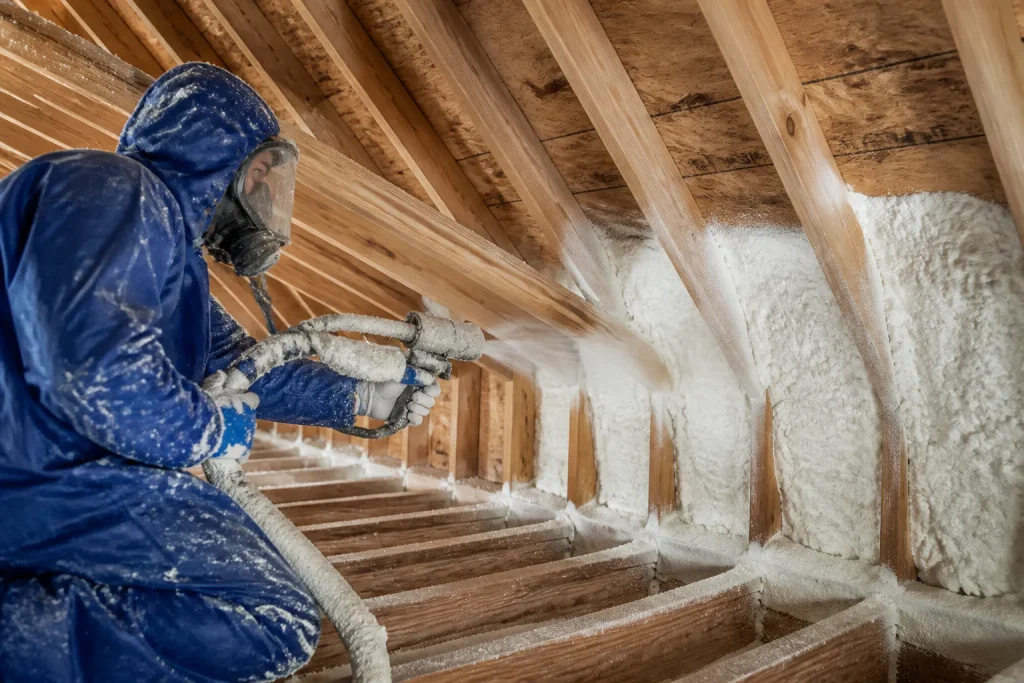
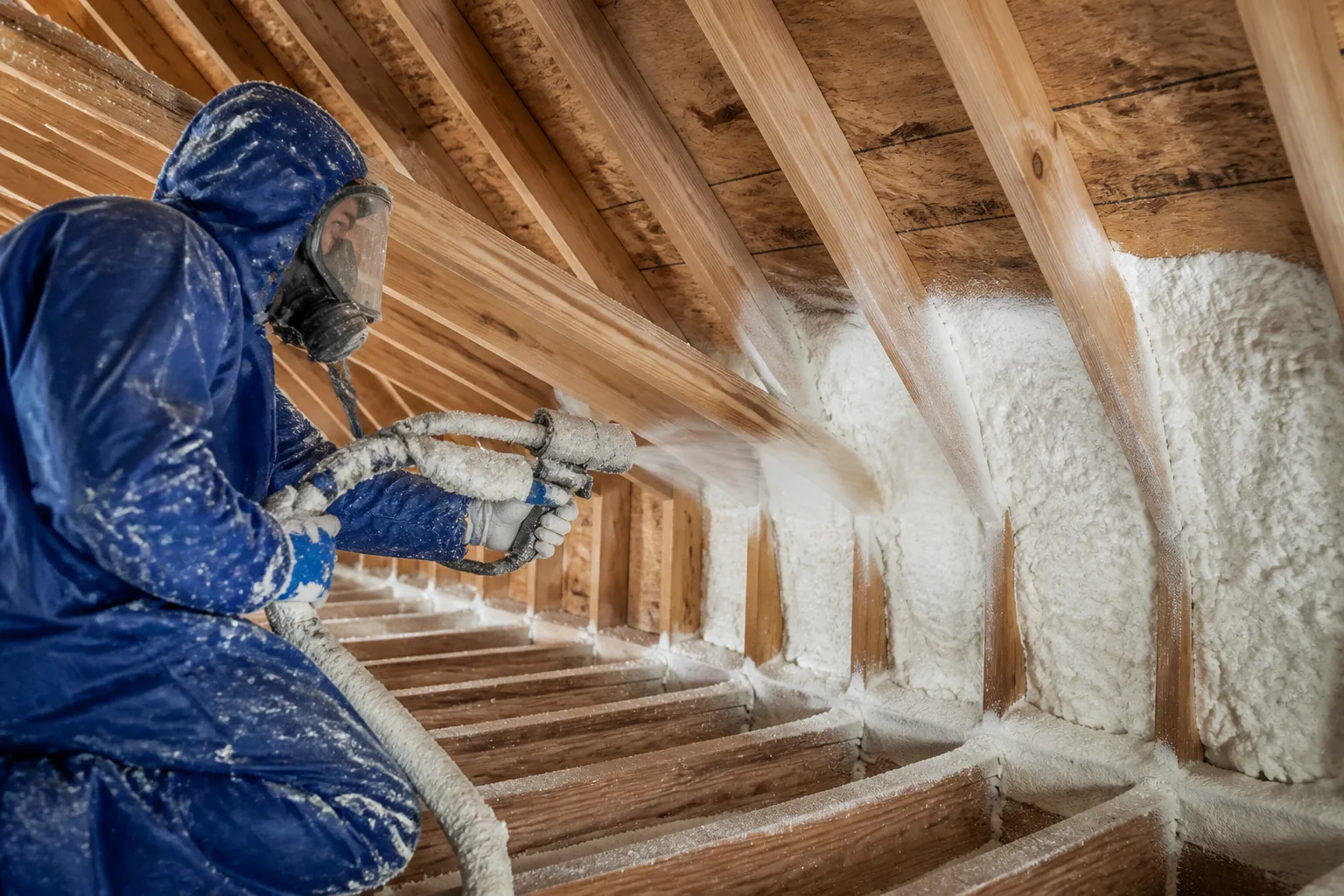
Unvented cathedral ceilings. These are the most common call we get for Icynene in Ontario. Cathedral ceilings have no attic floor to insulate, so the insulation has to live in the rafter bays. Blown-in and batts leave air gaps at the top plate and around baffles. Open-cell foam fills the entire cavity from drywall to roof sheathing, which stops the stack effect that pulls hot Ontario summer air through every seam. In this configuration, the air-sealing performance matters more than the R-value per inch.
Knee walls and bonus rooms. Finished space above a garage or a second-story bonus room often has sloped sections and short vertical knee walls that never get insulated properly. Fiberglass batts compress in these tight cavities. Open-cell foam expands to fill irregular voids and stays in place for the life of the house. We’ve seen attic bonus rooms in Ontario’s newer subdivisions off Euclid Avenue where the original builder left entire knee-wall cavities empty. Icynene is the fastest reliable fix.
Attics with heavy mechanical penetrations. If your attic houses an HVAC air handler, a spider web of flexible ductwork, recessed can lights, and bathroom exhaust fans, you have dozens of air leaks no batt installer can reasonably address. Open-cell foam wraps around these penetrations and seals them in a single pass. The difference in delivered air temperature through those ducts in July is measurable on the first day.
For standard vented flat attics, blown-in insulation remains a smarter value. Our Blown In Insulation in Ontario page covers those options in detail.
Ontario’s Climate and Open-Cell Foam: The Vapor Permeability Question
Open-cell spray foam is vapor permeable, meaning water vapor can pass through it. In humid coastal climates, that creates condensation risks against cold surfaces. Ontario’s climate behaves differently.
Ontario sits in California Climate Zone 10: hot, dry summers and mild winters with low average humidity. Moisture loads are modest compared with, say, a beach city on the coast. That lower ambient moisture makes open-cell foam a lower-risk material here. The vapor that does accumulate inside a house from cooking, showers, and laundry has a path to dry back through the foam toward the interior air space. In a coastal application, the same open-cell foam could trap that moisture against the underside of a cool roof deck and cause long-term rot.
This is one of those details that almost never appears in generic Icynene content. The product isn’t inherently good or bad for attic moisture. The local climate determines the risk profile. Ontario’s dry heat works in the material’s favor, and it’s one reason we spec Icynene open-cell in unvented cathedral applications here with more confidence than we would near the coast.
Roof deck temperatures matter too. In July, an Ontario roof deck can exceed 140°F. At those temperatures, open-cell foam’s installed R-value holds its own in cathedral applications where the foam fills the entire rafter bay and the roof assembly is designed for unvented performance. The key is detail work: baffles, ventilation channels where required by code, and attention to the roof assembly before spraying begins.
Installed R-Value vs. Nominal Rating: What Homeowners Should Know
“R-13 per inch” is the number most homeowners hear when open-cell foam comes up. It’s a laboratory number. Real conditions change it.
Open-cell foam’s R-value per inch is modest compared with closed-cell foam, which typically runs R-6 to R-7 per inch. To hit code-meeting R-values in an unvented cathedral, open-cell needs more installation depth. In a 2×8 rafter bay, you’re filling about 7.25 inches with open-cell for roughly R-26. A closed-cell product could reach the same R-value in about 4 inches, leaving room for other materials or a lower profile.
But R-value alone doesn’t tell the whole story. Open-cell foam’s real contribution is air sealing. A wall or roofline assembly that’s fully foam-sealed can outperform a higher nominal R-value batt assembly because it eliminates convective heat loss through air movement. That’s not marketing spin. It’s measured performance in blower-door testing.
For Ontario attics, the practical takeaway is this: if your attic is vented and flat, blown-in fiberglass or cellulose at R-38 to R-49 will outperform open-cell foam on cost and deliver equivalent comfort. If your attic is unvented, Icynene open-cell becomes a strong contender. Match the material to the configuration. That’s the whole job.
Icynene MD-R-210 vs. Closed-Cell Options for the Same Attic
When an unvented attic calls for spray foam, the next question is open-cell (Icynene) versus closed-cell. Here’s the comparison we walk Ontario homeowners through.
- Cost. Open-cell runs meaningfully less per board foot than closed-cell. For a full cathedral ceiling in a 2,000-square-foot Ontario ranch, that difference can be thousands of dollars.
- Air sealing. Both products seal air. Open-cell seals just as effectively at full cavity depth. Closed-cell adds a vapor barrier; open-cell does not.
- R-value per inch. Closed-cell wins here, roughly R-6.5 versus R-3.7. But open-cell can be installed to full rafter depth, which closes the total R-value gap at a lower material cost.
- Structural contribution. Closed-cell adds shear strength to the roof deck. Open-cell does not. In Ontario, where high-wind events are rare, this matters less than it would in a hurricane zone.
- Moisture behavior. Closed-cell blocks vapor. Open-cell allows vapor to move. As discussed, Ontario’s dry climate makes open-cell’s permeability manageable.
- Code compliance. Both products meet California energy code in unvented attic assemblies when installed at the specified depths. The details differ by city, so we check current Ontario building department requirements on every job.
Neither product is universally superior. We install both. The deciding factors are budget, roof assembly type, and whether the homeowner wants the added structural stiffness that closed-cell provides. If you want a more detailed breakdown, our Spray Foam Insulation in Ontario page covers the full product lineup.
What a Legitimate Icynene Installation Includes
Spray foam quality lives and dies on installation details. Brand name matters less than thickness verification and substrate prep.
Substrate preparation. The roof deck and rafter bays must be dry, free of loose debris, and free of any existing insulation. Spraying over dust or old fiberglass remnants creates adhesion failure. A legitimate installer will vacuum out the bays before spraying begins.
Thickness verification. After the foam cures, the installer should measure actual installed depth in multiple locations. “Eyeballing it” is how you get thin spots that undercut the R-value. We check with a probe and document the readings.
Trim-back procedure. Open-cell foam expands slightly beyond the rafter face as it cures. That excess must be trimmed flush before drywall goes back up. Skipping this step leaves lumps that push drywall out of plane and create finishing headaches for the drywall crew.
Ventilation checks. In hybrid assemblies where some ventilation remains, baffles must be installed before spraying to keep air channels open. In fully unvented assemblies, the roof deck itself becomes the assembly boundary. Either way, the detail work around the eaves determines whether the roof assembly performs and lasts.
Expansion and cure time. Icynene cures quickly, but the space should be ventilated during and after application. Reoccupation timelines should be followed according to the manufacturer’s specifications and the installer’s guidance.
If any of this description doesn’t match what a contractor proposes for your attic, ask questions. A cheap spray foam job that skips substrate prep or thickness verification is a liability, not a bargain.
For homeowners comparing insulation methods, our Attic Insulation in Ontario page breaks down the full range of options we install, and our Rock Solid Insulation home page explains our brand-neutral approach.
What happens when you call
- 1
A real person answersNo phone trees — you reach a local pro.
- 2
You get an upfront price rangeHonest numbers before anyone is dispatched.
- 3
A background-checked tech heads outLicensed & insured, dispatched right away.
- 4
You approve before work beginsNothing starts until you say go.
When to Call a Pro
Spray foam installation is not a DIY project. The application involves heated chemical components, specialized spray equipment, and strict ventilation requirements during cure. A bad spray foam job is genuinely expensive to fix: you can’t fluff up open-cell foam the way you can re-fluff settled cellulose. If the foam goes down wrong, it has to be cut out. That’s a multi-thousand-dollar mistake.
Even the evaluation step benefits from professional eyes. An Ontario attic with a complex roof geometry, an older unvented assembly, or signs of past moisture problems needs a measured assessment before any material is chosen. We’ve walked into homes where the previous contractor quoted open-cell foam for a vented flat attic simply because foam was “what they sold.” That’s the exact scenario where a blown-in product would have performed just as well at a fraction of the price.
Related services in Ontario: our Spray Foam Insulation in Ontario offering covers Icynene and Demilec systems, and our Blown In Insulation in Ontario service handles fiberglass and cellulose for vented attic applications.
The Bottom Line
Icynene open-cell spray foam is the right product for unvented cathedral ceilings, knee-wall cavities, and attics crowded with HVAC penetrations in Ontario. Its air-sealing performance in those configurations justifies the cost. For standard vented flat attics, a dense-packed blown-in product typically delivers equivalent comfort at a lower price. The decision should follow the attic configuration and your home’s construction, not a brand name.
Key takeaways:
- Icynene open-cell is a targeted solution, not a universal attic upgrade.
- Ontario’s dry CZ10 climate lowers the moisture risk profile for open-cell foam compared with coastal California.
- Installed R-value depends on depth and detail work, not just the nominal rating.
- A legitimate installation includes substrate prep, thickness verification, trim-back, and ventilation checks.
- If the attic is vented and flat, blown-in insulation is usually the smarter value.
If you’re in Ontario and want a straight answer for your specific attic, Rock Solid Insulation offers free estimates. Call (855) 798-0822 and we’ll tell you which material actually fits your home, whether that’s Icynene, Demilec, Owens Corning, or GreenFiber. No brand loyalty. Just performance you can measure.
Frequently Asked Questions
Icynene is worth the cost for unvented cathedral ceilings, knee-wall cavities, and attics with heavy HVAC penetrations where air sealing is the primary problem. In a standard vented flat attic, blown-in insulation typically delivers equivalent comfort at a lower price. Call (855) 798-0822 for an honest assessment of your specific attic.
Open-cell spray foam costs vary with the area sprayed and the depth required, but it generally runs several times the cost of blown-in insulation for the same attic. The final number depends on rafter depth, access, and whether existing insulation must be removed. Free estimates are available at (855) 798-0822.
No. Spray foam adheres directly to the roof deck or framing. Existing insulation must be removed from the bays before spraying begins. Installing foam over old fiberglass or cellulose creates adhesion failure and voids that undermine performance.
Open-cell foam is vapor permeable, which allows moisture to dry back toward the interior. In Ontario’s dry CZ10 climate, this is a manageable risk profile when the roof assembly is detailed correctly. In humid climates, the same product requires more careful design. Proper installation with ventilation checks matters more than the product itself.
Written by the team at Rock Solid Insulation, serving Ontario since 2012.
Need Insulation Help?
Call Rock Solid Insulation — licensed & insured, here with fast after-hours help in Ontario.
(855) 798-0822