Fast, Reliable Attic Insulation Across San Antonio Heights
Attic insulation in San Antonio Heights runs between $1,800 and $4,200 for a typical retrofit, depending on square footage, existing insulation condition, and the product you choose. That’s the honest range we quote homeowners here every week, and it covers everything from a blown-in top-up to a full removal-and-replace with air sealing. If your attic hasn’t been touched since the house went up, you’re paying for it every month in cooling costs and rooms that never hold temperature. Call us at (855) 798-0822 and we’ll give you a straight number after one attic inspection.
We know San Antonio Heights differently than a flatland contractor ever could. Homes up here on the alluvial bench don’t just need insulation for heat, they need it detailed so wind-driven embers can’t work through eave and gable vents during a Santa Ana event. That changes how we air-seal, what materials we recommend, and how carefully we check vent screening before any new batt or blown-in goes down. Our Attic Insulation team works this ZIP code every month, so we’re not guessing at what foothill homes need.
Why Rock Solid Insulation Is San Antonio Heights’s Preferred Attic Insulation Company
Ruben Calloway built Rock Solid Insulation around a simple principle: recommend the product that fits the house, not the one we happen to stock. That means when we’re called to a 1960s custom home on Euclid Avenue with exposed-beam ceilings and a pitch that makes attic access tight, we’re not pushing a single solution. We carry Owens Corning, Johns Manville, Knauf, and GreenFiber, plus Icynene and Demilec spray foam and Rockwool mineral wool. Eight brands, three installation methods. The recommendation follows what the home actually needs.
San Antonio Heights homeowners deal with a temperature swing that flatland Upland and Rancho Cucamonga don’t experience. Hot, dry afternoons that beat down on the roof, then genuinely cool mountain-fed nights that pull heat straight out of the attic. That diurnal shift means insulation has to work in both directions, holding heat out at 3 p.m. and holding it in at 3 a.m. Our customers tell us the difference shows up in their first energy bill after a retrofit, and in bedrooms that finally stay comfortable without cranking the AC.
Radiant Barrier in San Antonio Heights
Radiant Barrier in San Antonio Heights is one of the most effective upgrades we install for foothill homes, because it directly fights the intense afternoon sun that hits roofs along the San Gabriel bench with no shade break. A radiant barrier is a reflective material, typically installed on the underside of roof rafters, that bounces radiant heat back out of the attic before it can soak into your insulation and ceiling. In a home with vaulted or exposed-beam ceilings, where there’s limited space for thick insulation, a radiant barrier does what thermal mass can’t. We typically install radiant barrier in San Antonio Heights for $1.50 to $3.00 per square foot of attic floor area, depending on rafter configuration and access difficulty.
How Radiant Barrier Performs in Foothill Heat
Radiant barrier works by emissivity, not thickness. A properly installed barrier can reduce attic temperatures by 20 to 30 degrees on a 100-degree afternoon, which means your existing insulation isn’t fighting a 140-degree attic space. In San Antonio Heights homes with exposed-beam ceilings, this is often the single highest-impact upgrade we can make, because there’s simply no way to add R-38 batts where the ceiling follows the roofline. The barrier does the work the missing insulation can’t.
When Radiant Barrier Needs Replacement or Repair
We see radiant barrier failures in exactly one way around here: improper installation. Foil stapled flat against the roof deck with no air gap does almost nothing, because the reflective surface needs at least a 3/4-inch air space to work. If a previous contractor installed barrier tight against the sheathing, or if dust and rodent activity have coated the reflective surface, it’s not performing. We check emissivity with a thermal camera during every attic inspection, so you’ll know if your existing barrier is actually doing anything.
Attic Cleaning Services in San Antonio Heights
Attic Cleaning Services in San Antonio Heights aren’t optional before an insulation retrofit, because wind and wildlife create problems up here that flatland attics never see. Santa Ana winds drive dust, debris, and embers through eave vents, and roof rats, squirrels, and raccoons all take advantage of the disturbed insulation to nest near the warmest spots. We remove the contaminated insulation, vacuum out rodent droppings and nesting material, sanitize the affected areas, and prep the attic for new insulation. Full attic cleaning with old insulation removal typically costs $2.50 to $4.50 per square foot in this ZIP code.
Nesting Debris and Fire-Risk Pockets
Animal-disturbed batts are more than a nuisance here, they’re a fire-risk issue. When rodents shred fiberglass and drag insulation away from top plates, they create dry, exposed pockets where heat collects and embers can find a foothold during wildfire season. In San Antonio Heights, where homes sit in a designated wildland-urban interface zone, we treat nesting debris as a combustion hazard, not just a cleanup job. Every cleaning includes removal of all contaminated material down to the deck.
Air Sealing Before New Insulation
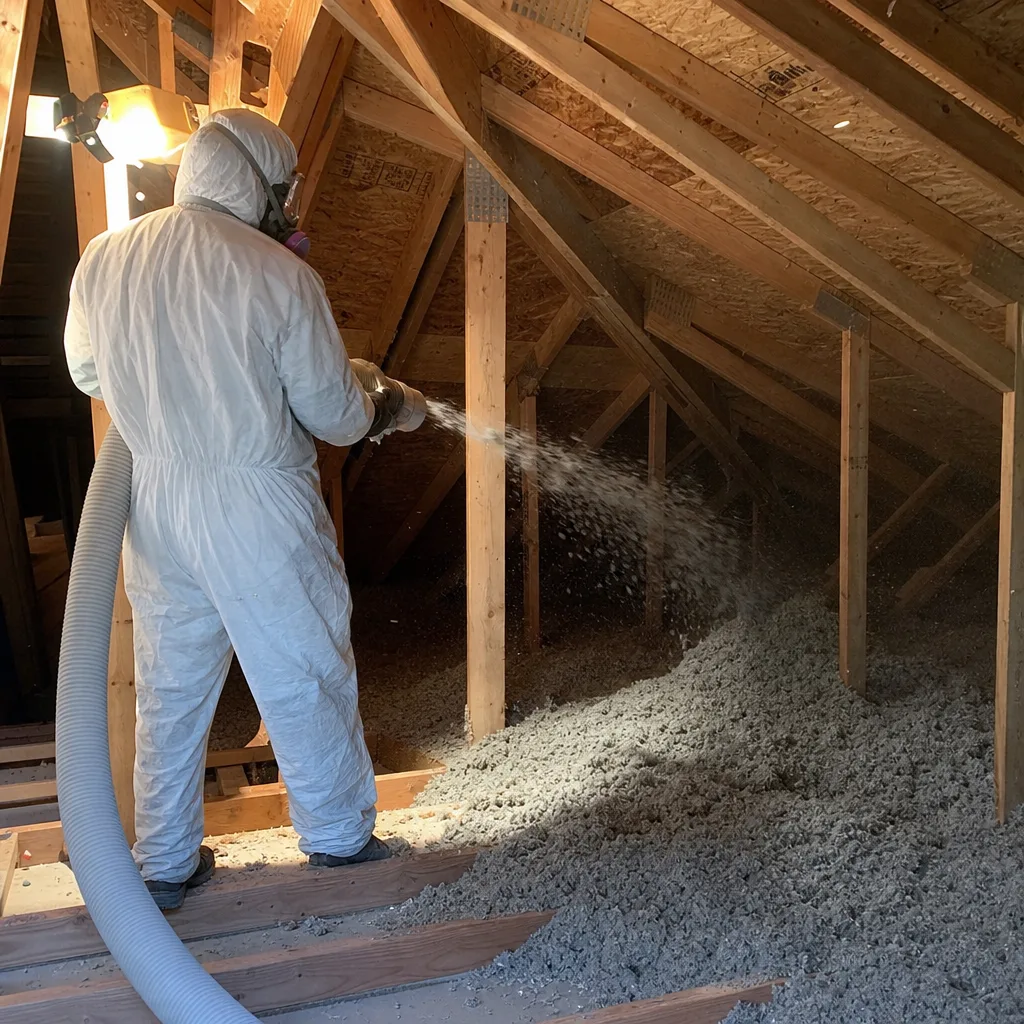
Cleaning a San Antonio Heights attic without air sealing would be like painting over rust. The gaps around top plates, plumbing penetrations, and electrical boxes are where your conditioned air escapes and where wind-driven embers enter. We seal every penetration with fire-rated caulk and foam before any new batt or blown-in product gets installed. That’s the step that stops the afternoon hot spots and the Santa Ana draft, and it’s the step most insulation companies skip because it’s slow, dirty work.
What happens when you call
- 1
A real person answersNo phone trees — you reach a local pro.
- 2
You get an upfront price rangeHonest numbers before anyone is dispatched.
- 3
A background-checked tech heads outLicensed & insured, dispatched right away.
- 4
You approve before work beginsNothing starts until you say go.
Trusted Brands We Service in San Antonio Heights
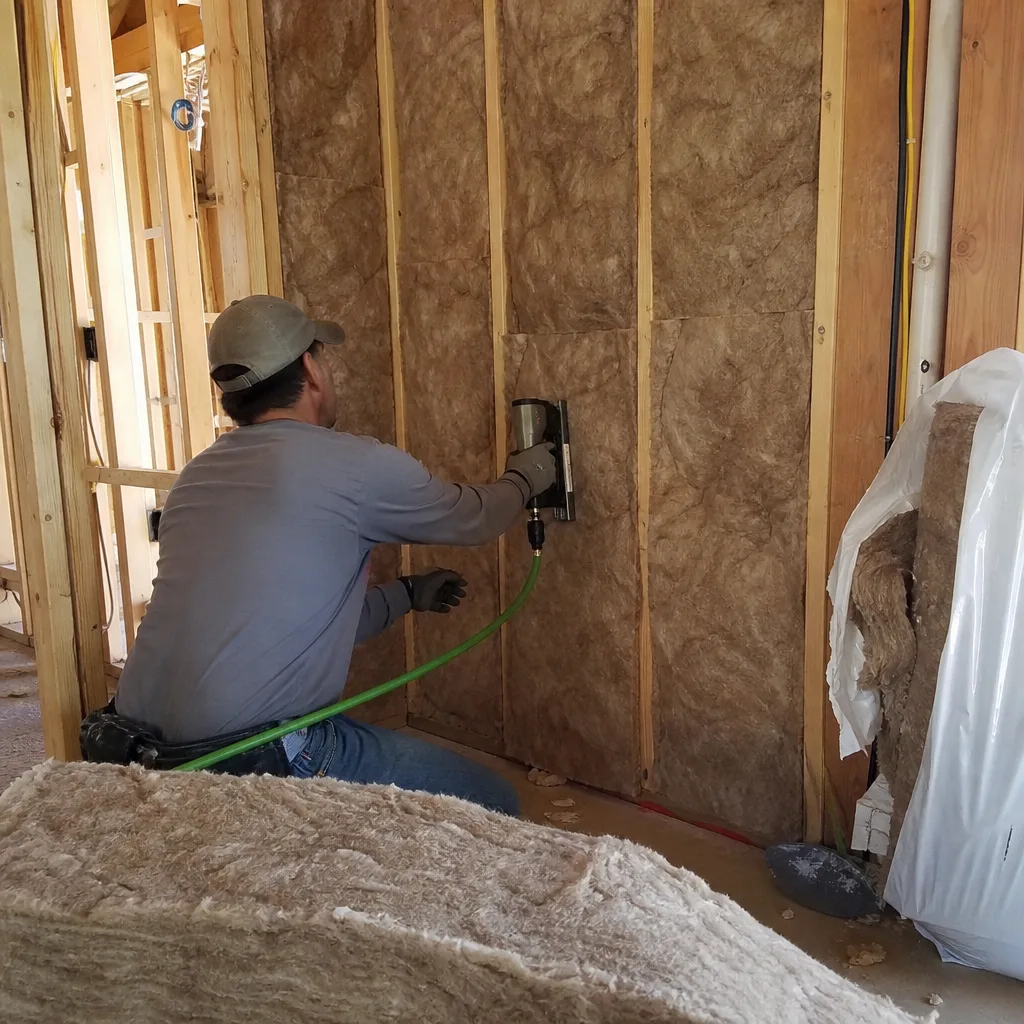
We install and service insulation from GreenFiber, Owens Corning, Johns Manville, Knauf, CertainTeed, Rockwool, Icynene, and Demilec, which means every recommendation is driven by performance data, not an exclusive supplier contract. If a San Antonio Heights attic needs blown-in cellulose for irregular joist bays, we recommend GreenFiber. If it needs batt insulation with verified R-value in a standard-framed attic, Owens Corning or Johns Manville make sense. If fire resistance is the top priority because of the wildland-urban interface, Rockwool mineral wool is the call. We stock local parts and keep product on hand for common San Antonio Heights retrofit scenarios, so turnaround is usually days, not weeks.
Common Attic Insulation Problems We See in San Antonio Heights Homes
- Wind-scoured insulation near eave and gable vents. Santa Ana winds blow through eave openings and physically erode fiberglass batts, leaving bare patches where heat pours into living space. This is a pressure dynamic flatland homes in Upland or Rancho Cucamonga simply don’t experience.
- Animal-disturbed batts and nesting debris. Older custom homes on large foothill lots attract roof rats and squirrels looking for warm nesting material. We routinely find shredded insulation, droppings, and food caches that compromise both thermal performance and fire safety.
- Vaulted-ceiling heat gain with no radiant mitigation. Mid-century custom homes along Euclid Avenue and around Mountain Avenue often have exposed-beam ceilings with no attic space to hold insulation. These rooms bake in the afternoon unless a radiant barrier or spray foam is installed against the roofline.
- Water damage from wind-driven rain. When Santa Anas push rain sideways, it enters through gable vents and damaged flashing, soaking insulation and creating conditions where mold and rot outpace any thermal benefit the material once had.
Pricing for Attic Insulation in San Antonio Heights, CA
Here’s what we quote in this ZIP code. A basic blown-in top-up with air sealing runs $1,800 to $3,200 for a 1,200 to 2,000 square foot attic. Full removal of old or contaminated insulation, cleaning, air sealing, and new blow-in runs $3,500 to $6,500. Radiant barrier installation adds $1.50 to $3.00 per square foot. Attic cleaning as a standalone service costs $2.50 to $4.50 per square foot. Larger custom homes with complex rooflines, multiple attic zones, or steep pitch access will land at the higher end of those ranges. Every estimate is free, and we give you the number before any work starts. Call (855) 798-0822 to schedule an inspection.
Key Takeaways for San Antonio Heights Homeowners
- Attic insulation in San Antonio Heights typically costs $1,800 to $4,200 for a standard retrofit, with full removal and replacement running $3,500 to $6,500.
- Wind-driven ember intrusion through eave and gable vents is a real threat in this wildland-urban interface zone, and air sealing with fire-rated materials is not optional.
- Vaulted and exposed-beam ceilings common in mid-century foothill homes need radiant barrier or spray foam, because there’s no attic cavity to insulate.
- Animal-disturbed insulation is a fire-safety issue here, not just a comfort problem. Cleaning and decontamination should precede any new insulation.
- We carry eight brands and three installation methods, so the product recommendation follows the home’s construction, not our inventory.
We Also Serve Cities Near San Antonio Heights
Our service area covers San Antonio Heights and the surrounding foothill and valley communities. If you’re in San Antonio Heights or nearby, we’re close by. We also provide attic insulation work in Upland, Claremont, Rancho Cucamonga, and Montclair. If you’re on the edge of San Antonio Heights or just down the hill, give us a call at (855) 798-0822 and we’ll confirm coverage for your street.
Serving San Antonio Heights, CA — Our Local Coverage Area
We’re based in the San Antonio Heights area and know this community well. Use the map below to see our service coverage — if you’re nearby, we can almost certainly help.
FAQs About Attic Insulation in San Antonio Heights
San Antonio Heights sits on the alluvial bench at the base of the San Gabriel Mountains, where Santa Ana winds come downslope and hit eave and gable vents directly, scouring insulation away from the roofline and driving embers into the attic. Homes in Upland and Rancho Cucamonga sit lower and flatter, so they don’t experience the same focused wind pressure on attic openings. Air sealing and ember-resistant vent screens are standard on our San Antonio Heights installs for this exact reason. Call (855) 798-0822 for an inspection if you’ve noticed dust or debris accumulating near your attic vents.
It means the insulation has to perform in both directions, resisting heat gain during brutal afternoon sun and resisting heat loss during cool mountain-fed nights. A simple fiberglass batt will do one of those jobs well and the other poorly if it’s installed without air sealing. We often recommend a combination approach here: radiant barrier to handle daytime heat, and dense-packed cellulose or spray foam to slow nighttime heat loss. The right product depends on your specific attic, and that’s exactly what our inspection determines.
The number one issue is the absence of any meaningful insulation in the vaulted ceiling cavity, because mid-century custom homes were built when energy was cheap and insulation science was primitive. The ceiling follows the roofline, so there’s no attic space to hold batts, and the cavity between ceiling and roof deck is usually thin and uninsulated. We solve this with spray foam against the roofline or radiant barrier under the rafters, depending on whether the homeowner wants to keep the exposed-beam look. On a recent retrofit off Euclid Avenue, we installed radiant barrier under the existing rafters and the afternoon heat gain in the living room dropped noticeably within a week.
Yes, and in San Antonio Heights we treat this as standard practice, not an upgrade. We remove wind-blown debris and animal nesting material, then seal every top plate, eave gap, and vent opening with fire-rated sealant. We also replace damaged vent screens with ember-resistant mesh, which is designed to stop burning embers from entering the attic during a wind event. If your home sits on the eastern side of Euclid Avenue or up against the foothills where Santa Ana exposure is strongest, this is the first thing we check.
Yes, and we do it regularly in San Antonio Heights, where many properties have detached garages that were built as afterthoughts with zero insulation. A detached garage attic is usually small and accessible, which makes a radiant barrier and blown-in cellulose install a quick job, often completed in a single day. This is a smart upgrade if you use the garage as a workshop, a gym, or a home office. Call (855) 798-0822 and we’ll quote the garage together with the main house, which often brings the per-square-foot cost down on the combined job.
If you’re tired of rooms that never hold temperature, or you’re worried about what a Santa Ana event could do to an unsealed attic, let’s get you an answer. Call Ruben and the Rock Solid Insulation team at (855) 798-0822 for a free attic inspection and a straight quote. We’ll show you exactly what’s in your attic, what it’s costing you, and what it would take to fix it right.
Written by Ruben Calloway, Owner at Rock Solid Insulation, serving San Antonio Heights and the Inland Empire foothills.