Fast, Reliable Attic Insulation Across Highgrove
Attic insulation in Highgrove solves a problem most coastal California homeowners never face: an attic that turns into an oven. The cost to insulate a typical attic here runs $1,800 – $4,200, depending on whether we’re topping up existing batts, removing old material, or air-sealing first. Highgrove sits in a hot inland basin where summer attic temperatures regularly spike 40 – 50°F above outdoor air. That turns a poorly insulated attic into a heat radiator pushing down into your living space all afternoon and evening. Rock Solid Insulation serves the 92313 zip code with same-week scheduling and a crew that knows these older ranch homes. Call us at (855) 798-0822 for a free estimate, and we’ll tell you exactly what your attic needs before recommending a single product.
Why Rock Solid Insulation Is Highgrove’s Preferred Attic Insulation Company
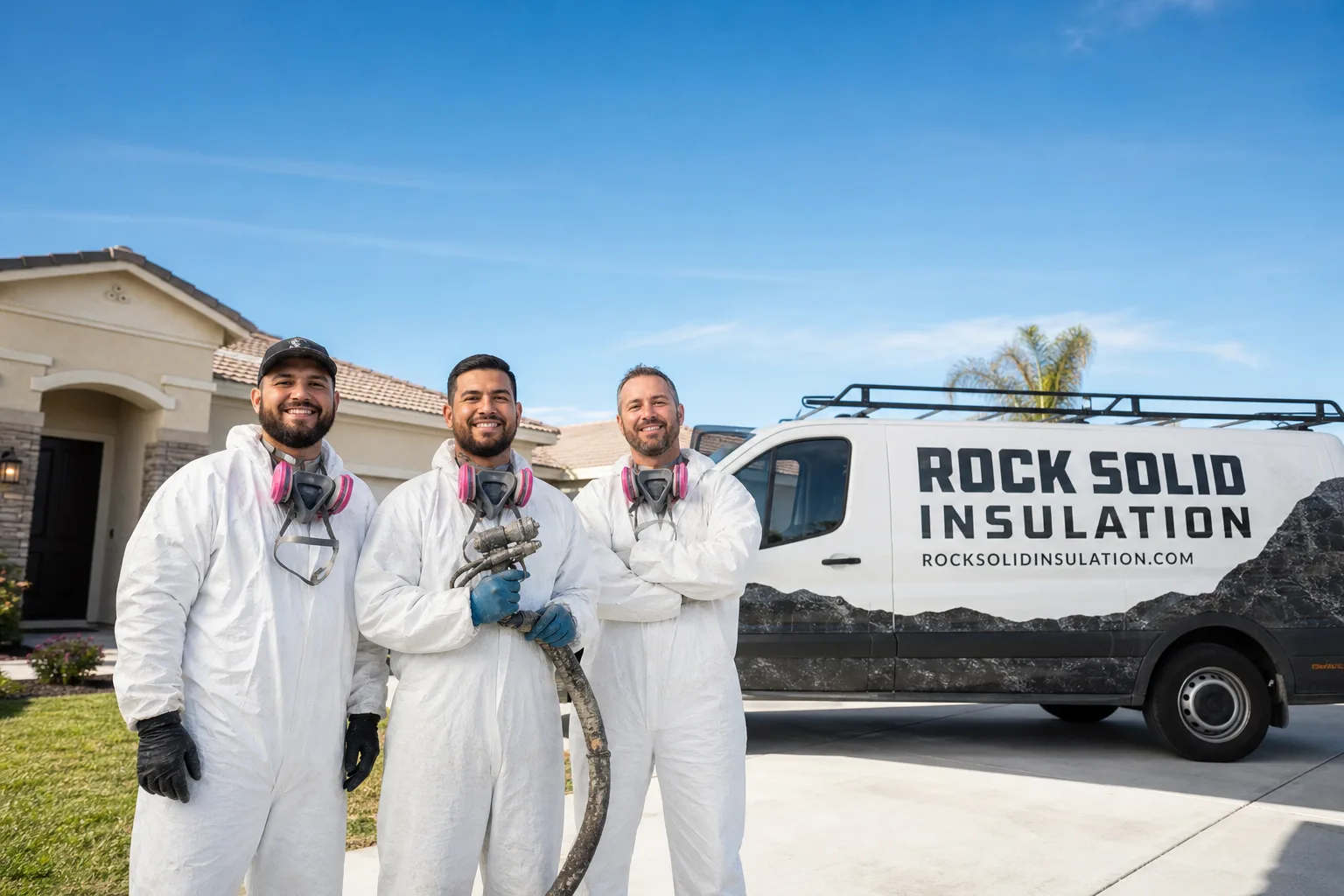
Highgrove homeowners call us because we diagnose before we install. Ruben Calloway, our owner, has walked through dozens of attics off Center Street, Barton Road, and along the unincorporated county acres that define this area. We know what’s up there: compressed original batts over exterior wall top plates, disconnected duct runs, and vents that were never adequate even when the house was built. Our approach is brand-neutral, which matters here. We carry Owens Corning, GreenFiber, and Johns Manville among eight product lines, and we recommend by performance fit, not by what we happen to stock. That means an older ranch with minimal venting gets a different prescription than a newer tract home. We arrive when we say we will, we protect your floors and driveway, and we leave the attic cleaner than we found it.
Attic Insulation Removal in Highgrove
Attic Insulation Removal in Highgrove is frequently the necessary first step before any upgrade, especially in homes built before 1980. Many of these ranch attics still hold the original fiberglass or rock wool batts, now compressed by decades of heat and dust, or contaminated by rodent activity and roof leaks. Removing that material clears the way for air-sealing and lets the new insulation perform at its rated R-value. A full removal on a typical 1,200 – 1,600 square foot Highgrove home runs $1,200 – $2,800, with pricing driven by access, contamination, and whether the old material is batt or blown-in.
When Removal Becomes the Only Option
We recommend removal when the existing insulation has sagged below R-11, shows water staining, or carries nesting debris. Highgrove’s diurnal temperature swings bake moisture into attics, and old batts near the eaves often wick that moisture and go flat. In these cases, blowing more insulation on top just buries the problem.
What We Do After the Old Material Comes Out
Once the attic is empty, Ruben’s crew air-seals every top plate, recessed light housing, and penetration. That step is non-negotiable here. Without it, hot attic air keeps pouring into the house and the new insulation underperforms no matter what R-value you buy.
Insulation Contractors in Highgrove
Insulation Contractors in Highgrove fall into two camps: general handymen who install fiberglass, and dedicated insulation crews who understand air-sealing, ventilation, and radiant barriers together. Rock Solid Insulation belongs to the second camp. We treat an attic as a system, not a cavity to stuff. For Highgrove’s older ranch homes, we usually recommend air-sealing plus blown-in fiberglass or cellulose to R-38 or better, paired with a ventilation upgrade. The labor for a full attic air-seal and insulation job here runs $2,200 – $4,800 depending on attic size and how much prep the existing framing needs.
Air-Sealing Before R-Value
It’s the single most skipped step in this trade, and the one that makes the biggest difference in Highgrove. We find open chases around chimney framing, unsealed top plates, and recessed lights venting directly into the attic. Sealing those leaks first is what makes higher R-value actually pay off on your SDG&E bill.
Ventilation and Radiant Barrier Strategy
Highgrove attics need ventilation designed for inland heat, not coastal mildness. Ridge vents, continuous soffit vents, and in some cases a radiant barrier stapled to the rafters can drop attic temperatures 20 – 30°F. That’s the difference between an upstairs bedroom at 82°F and one at 78°F on the same August afternoon.
Trusted Brands We Service in Highgrove
Rock Solid Insulation installs and services Owens Corning, Johns Manville, Knauf, and GreenFiber products, among our eight-brand lineup. For Highgrove customers, we keep the most-requested blown-in fiberglass and cellulose products readily available, which means we can often schedule a top-up within a week of the first call. If your attic needs mineral wool for a firewall or soundproofing application, we stock Rockwool batts as well. Our Attic Insulation team can walk you through the differences between these products honestly, because we’re not tied to a single manufacturer.
Common Attic Insulation Problems We See in Highgrove Homes
- Compressed or missing batts over exterior walls. The original 3-inch batts in older ranch attics settle to R-7 or less, especially near the eaves where the roof meets the walls. This creates a thermal bypass that pours heat into the rooms below. We find this on nearly every pre-1980 Highgrove home we inspect.
- Too few vents for inland heat. Many older Highgrove attics have only two small gable vents, which do almost nothing when the afternoon sun is hammering the roof. Superheated air sits trapped and bakes the insulation, ductwork, and anything stored up there. Adding ridge and soffit ventilation drops attic temps fast.
- DIY air-sealing that missed the hard spots. We often find foam kits used on the easy areas but none around recessed lights, plumbing penetrations, or the top plates themselves. Those leaks let hot attic air push into the conditioned space and undermine whatever insulation sits above it.
- Ducts running through uninsulated attic space. Many Highgrove homes route HVAC ducts through the hottest part of the attic. If the duct insulation is thin, you’re paying to cool air that gets warmed up before it reaches the registers. Insulating and sealing ducts is part of the attic insulation scope we quote.
Pricing for Attic Insulation in Highgrove, CA
We Also Serve Cities Near Highgrove
Rock Solid Insulation covers Highgrove and the surrounding Inland Empire communities, including Grand Terrace, Colton, Loma Linda, and Rubidoux. If you’re outside the 92313 zip but in one of these nearby areas, our Attic Insulation in Highgrove expertise applies just as well. Same scheduling, same brand-neutral approach.
Serving Highgrove, CA — Our Local Coverage Area
We’re based in the Highgrove area and know this community well. Use the map below to see our service coverage — if you’re nearby, we can almost certainly help.
FAQs About Attic Insulation in Highgrove
Why do Highgrove attics get so much hotter than coastal LA attics?
Highgrove sits roughly 50 miles inland, where summer daytime temperatures run 15 – 20°F hotter than Santa Monica or Long Beach, and there’s no marine layer to blunt the afternoon sun. A dark comp shingle roof here can push attic air to 150°F or more. Coastal attics rarely exceed 120°F. That’s why Highgrove demands stronger ventilation and higher R-value than a coastal house of the same footprint. Call (855) 798-0822 and we’ll measure your attic temps with a thermal probe during the estimate.
My Highgrove ranch has only two small gable vents – is that enough for attic insulation to work?
No. Two 8×16 gable vents are grossly undersized for a Highgrove attic. They don’t create the continuous ridge-to-soffit airflow that modern ventilation standards call for. Without that airflow, insulation still works, but the trapped heat above it degrades performance and bakes your ducts. We almost always recommend adding continuous soffit vents and a ridge vent before finalizing insulation. It’s a one-day add-on for most ranch homes.
Do I need to remove old insulation before adding new in my Highgrove attic?
Not always, but often. If the existing batts are dry, uncontaminated, and not compressed below roughly R-11, we can blow new fiberglass or cellulose right over them to reach R-38 or R-49. If there’s water damage, rodent activity, or the old material has gone flat, removal first is the right call. We’ll tell you honestly which route makes sense after inspecting your attic, and we won’t push removal if a top-up will do.
How does Highgrove’s large day-night temperature swing affect attic insulation choices?
Highgrove often swings 35 – 40°F between afternoon high and pre-dawn low. That thermal cycling stresses insulation that’s already marginal. Fiberglass batts settle faster under repeated heat cycling. Cellulose holds its loft longer in that environment. And air-sealing becomes more critical because the house’s thermal envelope is constantly fighting both directions of heat flow. We factor all of this into the product recommendation, which is why we lean on blown-in cellulose or high-density fiberglass for most Highgrove attics.
Can you handle attic insulation for rural Highgrove properties with detached workshops?
Yes. Many Highgrove properties sit on larger unincorporated county lots with detached garages, workshops, or converted outbuildings. We insulate those structures as separate projects or alongside the main house, whichever you prefer. The same air-sealing and ventilation principles apply, and we’ll quote each building individually so you know exactly what you’re paying for. Call (855) 798-0822 and mention the outbuilding when you schedule.
Written by Ruben Calloway, Owner at Rock Solid Insulation, serving Highgrove and the Inland Empire since the company’s founding.