Fast, Reliable Attic Insulation Across Baldwin Park
If your Baldwin Park home was built in the 1950s or 60s, there’s a good chance your attic is working against you. Most original insulation in the 91706 ZIP has settled to just a few inches of dusty mineral wool, or was never installed to begin with. Rock Solid Insulation works Baldwin Park weekly, and we know exactly what these tract attics hide: low clearances, old Romex, and thermal leakage that sends your cooling bill through the roof every summer. Call (855) 798-0822 and we’ll get your retrofit done right, usually in a single trip.
Why Rock Solid Insulation Is Baldwin Park’s Preferred Attic Insulation Company
We’re not a general contractor dabbling in insulation. We’re an Attic Insulation specialist carrying eight brands and running three installation methods, which means the recommendation you get follows your home’s actual condition, not whatever product we happen to stock that week. For Baldwin Park specifically, that matters. Terrain and housing stock change neighborhood by neighborhood, but the 1950s tract attics we open up near Baldwin Park Boulevard and the neighborhoods around Barnes Park share consistent problems: settled mineral wool, unsealed top plates, and wiring that pre-dates modern codes by decades.
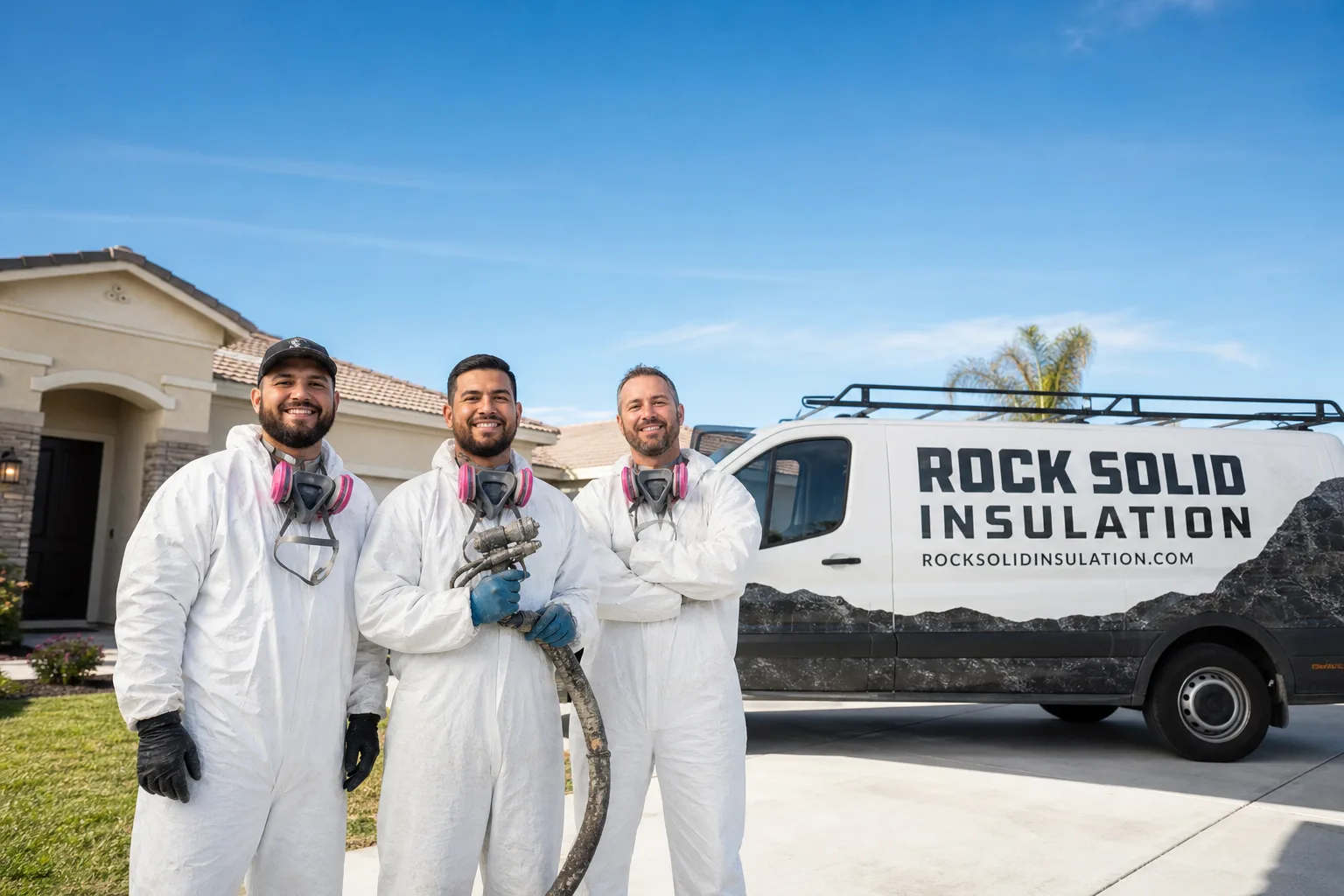
Ruben Calloway leads our crew, and he’s walked more San Gabriel Valley attics than most people have driven past. Homeowners across Baldwin Park keep our number because we show up on time, we work clean around old wiring, and we don’t upsell anything the house doesn’t need. If your attic needs a full replacement, we tell you. If a top-up gets you to Title 24 compliance, we say that too. The point is fit, not margin.
Our two- to three-hour response window to Baldwin Park comes from running our operation out of Ontario, CA. We’re close enough to handle same-week starts and short enough drives that a single-visit retrofit doesn’t mean someone rushing through the job to make the next appointment.
Attic Ventilation in Baldwin Park
Attic Ventilation in Baldwin Park isn’t just about moving air; it’s about protecting a low-pitch roof assembly from the San Gabriel Valley’s relentless summer heat and the fine dust that Santa Ana winds push through every gap. Without proper intake at the eaves and exhaust near the ridge, attic temperatures in a 1950s ranch can push 140°F on a 95°F day. That heat radiates into your living space and forces your AC to work against the roof itself.
Soffit and Ridge Vent Upgrades
Most older Baldwin Park homes were built with passive gable vents only, which stall out entirely on still summer afternoons. We add continuous soffit vents paired with either ridge or power ventilation, sized to your attic’s square footage and the roof’s pitch. On low-pitch 1950s roofs, we’re careful to maintain the air gap at the eave so blown-in insulation doesn’t block the intake path.
Venting Before You Insulate
If you’re adding 12 or more inches of blown-in material, ventilation prep isn’t optional. Damp, stagnant attic air degrades insulation performance and can warp roof decking. We install baffles along every rafter bay before new material goes in, which keeps the soffit channel open so your new insulation actually performs at its rated R-value.
Radiant Barrier in Baldwin Park
Radiant Barrier in Baldwin Park works because it attacks heat transfer by radiation, not conduction. On a July afternoon in the 91706 ZIP, the underside of your roof deck can exceed 130°F. A properly installed radiant barrier reflects most of that radiant energy back toward the roof, which means the attic air stays measurably cooler before you even factor in ventilation. For single-story tract homes with a large roof footprint relative to living space, that’s direct cooling-load reduction.
Stapled Deck Barriers for Low-Pitch Attics
Many Baldwin Park attics are tight, with clearances under four feet at the ridge. We use single-sided or double-sided foil depending on whether dust buildup is a concern, stapled directly to the underside of the roof decking. It reflects radiant heat, doesn’t compress your blown-in insulation, and stays out of the way of wiring and future access.
Combining Barrier with Blown-In
A radiant barrier is not a substitute for insulation. It complements it. On a typical Baldwin Park ranch, the combination of 12+ inches of GreenFiber or Owens Corning blown-in material plus a deck-mounted radiant barrier cuts attic temperature gain dramatically, which reduces heat transfer downward through the ceiling. It’s the same setup we’d recommend to our own families in this climate.
Trusted Brands We Service in Baldwin Park
We stock and install GreenFiber cellulose, Owens Corning and Johns Manville batt products, and Knauf blown-in fiberglass, which means we match the material to the job, not the other way around. For a dusty old Baldwin Park attic with open joist bays and existing wiring, GreenFiber’s dense coverage is often the cleanest play. For a re-batt job where an attic might one day be used for storage, Owens Corning or Johns Manville give you a tidier finished product. You won’t find us pushing one brand because we get a better rebate. We recommend by performance, by the conditions in your attic, and by your budget. And because we’re running out of Ontario, parts and material for Baldwin Park jobs don’t sit in a warehouse across the county.
Common Attic Insulation Problems We See in Baldwin Park Homes
- Settled original mineral wool. In many 1950s Baldwin Park ranches, the original insulation has compressed to just two or three inches, which is effectively an R-value near zero by current standards. Homeowners often have no idea until we open the hatch and show them.
- Unsealed top plates and wiring penetrations. Santa Ana wind events push fine dust and wildfire smoke straight through gaps around the top plates of interior walls and around old knob-and-tube or early Romex entry points. Insulation alone doesn’t stop this; air-sealing has to happen first.
- Low-pitch attic clearances. Many 91706 homes have less than four feet of working space at the peak. Careless blow-in jobs bury or crush old wiring, which is both a fire risk and a code violation. We work around it methodically.
- Blocked or missing soffit vents. Original gable-only ventilation stalls in still air, and attic heat radiates downward into the house. We add baffles and proper soffit venting before any new insulation goes in.
Pricing for Attic Insulation in Baldwin Park, CA
For a typical 1,100- to 1,400-square-foot Baldwin Park ranch, a full attic insulation removal and replacement runs roughly $1,800 to $3,400, depending on depth required and whether air-sealing and baffles are part of the job. A blown-in top-up over existing material runs $900 to $1,600. Radiant barrier installation on a low-pitch attic is generally $1,200 to $2,200. Attic ventilation work, including soffit and ridge upgrades, runs $700 to $1,800. These are real ranges for this market, not national averages. Call (855) 798-0822 for a free estimate, and we’ll quote your attic accurately, usually the same day.
We Also Serve Cities Near Baldwin Park
Based in Ontario, we cover the central San Gabriel Valley. If you’re in Duarte, Irwindale, Bradbury, or Avocado Heights, you’re inside our normal service area, and the same Baldwin Park pricing and single-trip approach applies. We schedule the entire corridor in one day so your job doesn’t wait on a far-out dispatch.
Serving Baldwin Park, CA — Our Local Coverage Area
We’re based in the Baldwin Park area and know this community well. Use the map below to see our service coverage — if you’re nearby, we can almost certainly help.
FAQs About Attic Insulation in Baldwin Park
Because what’s up there now has likely settled to two or three inches of dusty mineral wool, which performs at an R-value close to zero. Title 24 attic recommendations in our climate zone call for R-38 to R-49, which translates to roughly 12 to 16 inches of blown-in material. We routinely open Baldwin Park attics that haven’t been touched since the Eisenhower administration. Call (855) 798-0822 and we’ll check yours.
Yes. We work in low-pitch 1950s tract attics every week, and we’re careful around early Romex and any remaining knob-and-tube runs. We don’t bury or crush wiring, and we air-seal around penetrations before blowing in new material. If it’s a tight one, we’ll tell you exactly how we’ll approach it before work starts.
Only if the attic is air-sealed at the same time. Insulation slows heat transfer, but it doesn’t stop fine dust and smoke from pulling through top plate gaps, wiring holes, and plumbing penetrations. We seal those annuli with foam or caulk before installing new insulation, which is the step many contractors skip. In Baldwin Park’s Santa Ana season, that sealing is half the value of the job.
For most Baldwin Park homes, yes. The sun loads on a low-pitch roof all afternoon, and a radiant barrier cuts attic temperature gain at the source. It’s not a substitute for insulation; it’s the layer that makes your blown-in material perform better. On a July day in the 91706 ZIP, the combination measurably reduces cooling demand.
Yes, and that’s how we plan it. On a recent low-pitch ranch off Ramona Boulevard, our crew air-sealed the top plates, blew in GreenFiber to a full 12 inches, added a radiant barrier, and finished the soffit and ridge venting all in one day. The homeowner wanted no return truck roll, and we built the schedule so none was needed. Call (855) 798-0822 to lock in a single-visit retrofit.
Call Rock Solid Insulation at (855) 798-0822 today for a free Baldwin Park attic assessment. We’ll inspect your insulation depth, check your ventilation, and give you an honest number before you commit to anything.
Written by Ruben Calloway, Owner at Rock Solid Insulation, serving Baldwin Park and the San Gabriel Valley since day one.