Attic Insulation What It Really Costs: What Ontario Homeowners Pay in 2026
Attic insulation in Ontario, CA currently runs between $1,200 and $5,600 for a typical 1,200 to 1,500 square foot attic, depending on material, depth, and whether air sealing is included. That’s a wide range, and it exists because two quotes for the same house often describe completely different scopes of work. If you’d rather skip the math and get a straight answer, call (855) 798-0822 for a free estimate.
We’ve been inside hundreds of Ontario attics, from older ranch homes near the 60 freeway to newer builds up in the Archibald Ranch area. And the single biggest mistake we see homeowners make is comparing two quotes on price alone without checking what each contractor actually plans to do. A $1,200 blown-in fiberglass job with no air sealing and R-30 depth is not the same product as a $3,800 spray foam job with full air sealing and an attic hatch upgrade. The first will leave you with roughly the same energy bills. The second will cut them noticeably.
This guide breaks down exactly where your money goes, what different methods cost per square foot in Ontario specifically, and how to read a quote so you know what you’re actually paying for.
What Attic Insulation Costs Per Square Foot in Ontario: A Method-by-Method Breakdown
The most useful way to compare insulation costs is by installed price per square foot, including materials and labor. Here’s where Ontario market rates sit in 2026:
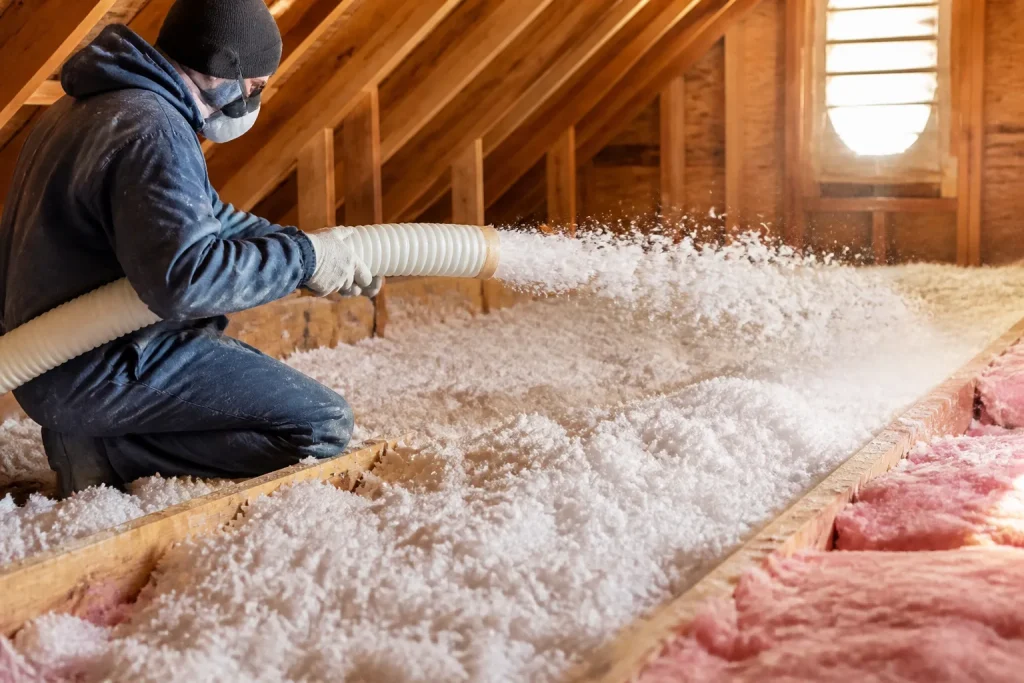
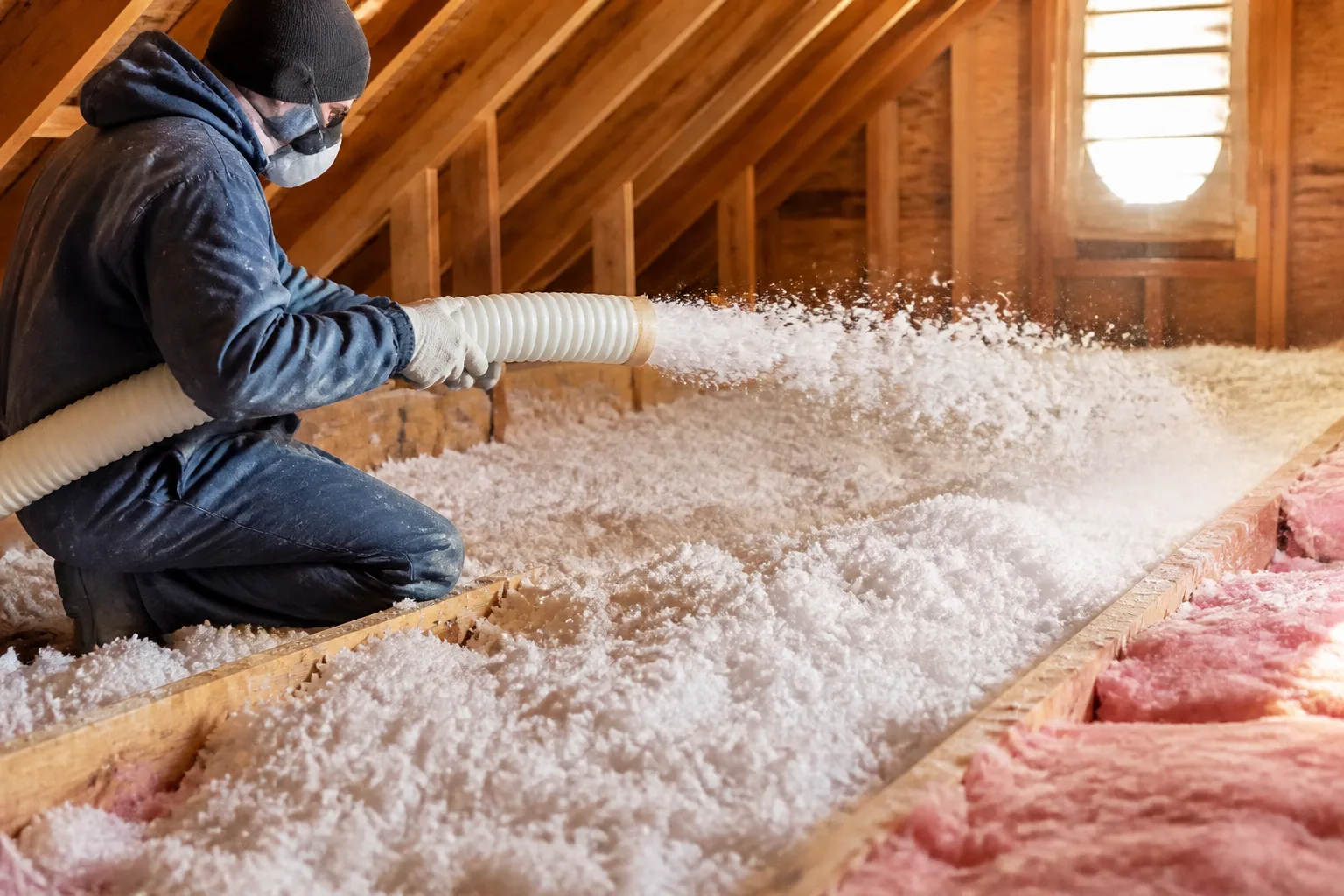
- Blown-in fiberglass: $0.75 to $1.40 per square foot installed. Material like Owens Corning AttiCat is inexpensive, and labor is fast. Typically R-38 to R-49 depth, roughly 14 to 17 inches.
- Blown-in cellulose: $0.90 to $1.60 per square foot installed. GreenFiber and similar products cost slightly more than fiberglass per bag but settle less over time and perform better in high heat, which matters through Ontario summers when attic temperatures regularly exceed 130°F.
- Fiberglass batts: $1.00 to $1.75 per square foot installed. Batts work fine for open, unobstructed attics but perform poorly when there’s HVAC ducting, recessed lights, or odd framing to work around, because the material can’t conform to irregular cavities.
- Open-cell spray foam: $1.75 to $2.75 per square foot installed at 5.5 inches (R-20 to R-21). Open-cell foams like Icynene Classic seal air leaks as they insulate, which makes them attractive for attics with lots of penetrations.
- Closed-cell spray foam: $2.50 to $4.00 per square foot installed at 3 inches (R-21). Demilec closed-cell products cost more because the material is denser and the installation is more technical, but you get higher R-value per inch and a vapor barrier in one pass.
These numbers assume a typical Ontario attic with reasonable access and no major prep issues. The range within each method reflects local labor rates, the condition of your existing insulation, and how much detail work the job requires.
One important note: if you’re comparing these to quotes from the Temecula or Riverside side of the county, Ontario pricing tends to sit in the middle. Local code enforcement under the Ontario Building Department also requires specific attic access dimensions and ventilation ratios, and a contractor who knows those requirements will rarely be the cheapest bid.
The Hidden Line Items Most Low Quotes Leave Out
Here’s the part that explains most of the sticker shock when one quote comes in at $1,100 and another at $3,900 for the same attic. The low quote usually isn’t covering the same scope. In our experience quoting Ontario homes, these are the most common items an aggressive bid will skip:
- Air sealing: Caulking and foaming around plumbing penetrations, electrical boxes, duct registers, and top plates before insulation goes in. This is the single biggest driver of real energy savings. Material and labor typically add $400 to $900. A quote that doesn’t mention air sealing isn’t doing it.
- Attic hatch upgrade: The pull-down ladder or access panel at the top of your hallway is often the leakiest point in the ceiling. A proper insulated hatch cover adds $150 to $350.
- Existing insulation removal: If your attic has rodent damage, old compressed batts, or insulation that’s been soaked by a roof leak, it needs to come out before new material goes in. Removal and disposal runs $1.50 to $3.00 per square foot, and skipping it means any new insulation gets contaminated or the air sealing underneath never happens.
- Baffle installation: Vent chutes at the eaves keep soffit vents clear so your attic can breathe. At $3 to $6 per baffle with 20 to 30 baffles on a typical Ontario ranch, that’s $60 to $180 on the quote. Cheap bids skip them, and then insulation blocks the soffits and you get moisture problems a few years down the road.
- Disposal fees: Landfill tipping costs in the Inland Empire are not free. Any quote that includes removal should line-item a disposal charge; if it doesn’t, ask where the old material is going.
When we pulled the old insulation out of a 1970s ranch over near Chaffey High School last month, there was a mummified opossum under the fiberglass and the original R-11 batts had compressed to about R-5. The homeowner had gotten a quote from another company that would have blown new material right over the top of all of it. The quote was $2,200 cheaper. It also would have been money thrown into a contaminated layer that never got air sealed.
How California’s TECH Clean Rebates and SCE Incentives Change the Real Price
Ontario homeowners paying for attic insulation in 2026 have access to incentives that most contractors never mention. If you’re in Southern California Edison territory, which covers most of Ontario, the utility’s home efficiency rebate program can offset a meaningful chunk of qualifying insulation work. The TECH Clean California program has also funded heat pump and envelope improvements, though funding cycles shift, and you should check current availability before budgeting on money that may have already been allocated.
The practical impact: a $2,400 blown-in cellulose job with air sealing might qualify for $250 to $500 back through SCE or a state program, depending on the specific scope and whether your home meets the program’s eligibility thresholds. Spray foam installs that meet air leakage reduction targets can sometimes qualify for larger envelope improvement incentives, though the paperwork burden falls on you or on a contractor who bothers to file it.
The other incentive that matters more year-round is the ongoing energy savings. An attic that goes from R-11 to R-49 with proper air sealing in an Ontario summer typically drops the upstairs temperature by 5 to 10 degrees on hot afternoons. That means your air conditioner cycles less, and an AC unit that cycles less lasts longer. The big-ticket repair you avoid is an incentive no rebate program needs to advertise.
If you want to know what’s currently available for your specific home, call (855) 798-0822 and we can point you to the right program. We don’t file rebates on your behalf, but we’ll tell you what to submit and what documentation you need from us.
Why Attic Square Footage Is a Terrible Predictor of Total Cost
Five factors move the final number more than the simple square footage of the attic floor. You can’t fix any of them by shopping for a lower price per square foot, but you can understand them before you call three contractors.
Access difficulty. A pulldown ladder in a hallway closet is the easiest scenario. A scuttle hole in a bathroom ceiling, an attic with a low pitch roof, or one where the access is in a finished garage ceiling all slow the crew down. Time is labor, and labor is most of your quote.
Existing insulation condition. An attic with clean, dry R-19 batts that just needs to be topped up is a half-day job. An attic with rodent droppings, compressed material, and maybe an old leak needs removal, sanitizing, and disposal first, which can triple the labor hours.
HVAC equipment in the attic. Many Ontario homes have furnaces or air handlers in the attic. That equipment sits on platforms, blocks access to the areas around it, and makes blowing insulation evenly much harder. A good crew works around it carefully; a bad crew buries it and calls the job done.
Roof pitch and eave height. The lower the roof slope, the tighter the workspace near the eaves. A 3:12 pitch attic is a crawl on your stomach from the ridge to where the soffit baffles go. It takes twice as long and you feel it in the labor charge.
Ductwork condition. Leaky ducts in the attic are the other half of attic energy loss. If the ducts are accessible and obviously leaking, sealing them before you insulate costs extra but pays back faster than any material upgrade.
These factors are why two 1,400 square foot attics in the same Ontario neighborhood can land $2,000 apart on a quote even when both contractors are honest. One attic is open and empty. The other has a furnace, ductwork, a low pitch, and rat damage. The square footage didn’t change. The job did.
How to Read an Insulation Quote: The Five Line Items That Separate a Real Scope from a Handshake Estimate
A quote that takes 30 seconds to read is usually not a quote, it’s a number with a truck. Here’s what a detailed Ontario insulation quote should show you:
- Prep work: Removal of existing material (if applicable), sanitizing, ventilation baffles, air sealing materials, floor protection or containment work.
- Material type and brand: The exact product going in, not “blown-in insulation.” Whether it’s Owens Corning AttiCat, GreenFiber cellulose, Icynene open-cell, or Demilec closed-cell, the brand tells you who stands behind the material.
- Depth or R-value target: R-30, R-38, R-49, whatever the spec is, stated clearly as a number with an installed depth. If the quote doesn’t state the R-value, the contractor isn’t committing to one.
- Air sealing scope: A line item listing what gets sealed: top plates, plumbing penetrations, electrical boxes, duct boots, or attic hatch. “Air sealing included” without a scope is not a scope.
- Warranty terms: Whether the installation carries a labor warranty and what the material manufacturer covers separately. Icynene and Demilec both have product warranties that require certified installers; the quote should name that certification.
We’ve handed quotes to Ontario homeowners who then showed us what another bidder gave them: a single line that said “insulate attic: $1,450.” No R-value, no material, no air sealing, no brand. That’s not always dishonesty. Sometimes it’s a contractor who does one thing, does it fast, and hasn’t been asked for better. But you’re not buying a price, you’re buying a result.
A related point: when we recommend a product, it’s because the material fits the attic, not because we’re locked into selling it. Our lineup includes branded fiberglass, mineral wool, cellulose, and both open- and closed-cell spray foam, which means the recommendation follows the house. That matters in a climate like Ontario’s, where two attics a quarter mile apart can need very different treatments depending on sun exposure, ventilation, and how the home was framed.
Key Takeaways
- Attic insulation in Ontario costs $0.75 to $4.00 per square foot installed, depending on method and scope.
- Low quotes almost always omit air sealing, hatch upgrades, removal, or disposal, and that’s why the price gap exists.
- SCE and TECH Clean incentives can offset $250 or more on qualifying Ontario installs.
- Square footage alone will mislead you. Access, existing insulation condition, and ductwork matter more.
- A real quote names the material brand, the R-value target, and the air sealing scope. If it doesn’t, ask for it.
When to Call a Pro
If your attic has existing insulation that looks compressed, water-stained, or smells like rodents, don’t have someone blow new material over it. You’ll trap contamination under the new layer and you won’t fix the air leaks underneath. Removal comes first, then sealing, then the new material. That’s not an upsell. That’s the order the job has to happen in for the dollars you spend to do anything.
The same goes for spray foam. It is not a weekend project and the chemistry is not forgiving. We’ve seen DIY spray foam kits fail to cure, cure unevenly, or off-gas for weeks because the two components weren’t mixed correctly in an Ontario attic in August. A certified installer knows how to adjust for temperature and substrate conditions. This is a case where the professional isn’t charging for labor you could do yourself; they’re charging for the training that keeps the job from going sideways.
Related services in Ontario: we install Attic Insulation in Ontario, Spray Foam Insulation in Ontario, and Blown In Insulation in Ontario. If you’re not sure which method fits your attic, that’s the conversation to have before you sign anything. You can also learn more about our full range of services on the Rock Solid Insulation home page.
The Bottom Line
Attic insulation quotes in Ontario range from about $1,200 to $5,600 for a typical home because contractors are bidding different scopes, not because some of them are twice as efficient. The difference is air sealing, prep labor, material quality, and whether the contractor specifies the R-value and brand of what’s going in. A cheap quote that skips air sealing is not a bargain; it’s an incomplete job that leaves the most important half of the work undone.
If you’re in Ontario and want a quote you can actually compare, look for one that names the material, states the R-value, and lists the prep work line by line. Then compare it to the others. If you’d like us to take a look at your attic, the estimate is free and there’s no pressure to decide on the spot. Call (855) 798-0822 and we’ll set up a time.
Frequently Asked Questions
Most Ontario attics cost between $1,200 and $5,600 to insulate in 2026, depending on the attic’s size, method, existing insulation condition, and whether air sealing is included. Call (855) 798-0822 for a free estimate on your specific home.
In Ontario, topping up attic insulation with blown-in material is cheaper per dollar than a full removal and replacement, but only makes sense when the existing insulation is dry, clean, and relatively uncompressed. If there’s rodent damage, water damage, or compressed material, replacement costs more upfront but actually delivers the energy savings you’re paying for.
Yes, Southern California Edison’s home efficiency incentive program covers qualifying attic insulation improvements for Ontario homeowners in 2026. The rebate amount varies by project scope and product type, and spray foam that achieves measurable air leakage reduction sometimes qualifies for larger envelope incentives. Check current program availability before budgeting.
For most standard blown-in fiberglass or cellulose jobs in Ontario, yes, the work can be completed in a single day. Spray foam takes longer due to the application method and curing time, and any job requiring old insulation removal or extensive air sealing will likely run a second day. Call (855) 798-0822 to schedule an assessment and get a timeline for your attic.
Written by the team at Rock Solid Insulation, serving Ontario since 2012.
Need Insulation Help?
Call Rock Solid Insulation — licensed & insured, here with fast after-hours help in Ontario.
(855) 798-0822