How Much Does Crawl Space Encapsulation & Vapor Barrier Cost in Ontario?
Crawl space encapsulation and vapor barrier installation in Ontario, CA typically runs $1,800 to $6,500 for most single-family homes, with a full sealed encapsulation (liner, drainage, dehumidifier) landing around $4,500 to $9,000. A basic 6-mil vapor barrier alone usually falls between $1,800 and $3,200 for a typical Ontario crawl space. The final number comes down to square footage, how much moisture damage we find, and whether you add drainage, insulation, or a dehumidifier.
Ontario sits in the Inland Empire, where summer heat pushes 100°F and winter mornings still pull heavy dew. That swing drives a lot of crawl space moisture problems we see across the city, from the older tract homes near Euclid Avenue to newer builds out toward Eastvale. Call (855) 798-0822 for a free estimate and we’ll price your specific crawl space, not a ballpark.
Key Takeaways
- Most Ontario crawl space encapsulation jobs land between $1,800 and $6,500; full sealed systems with a dehumidifier run higher.
- Vapor barrier alone is the lower-cost option; encapsulation adds drainage, sealing, and climate control.
- Pier-and-beam homes common in older Ontario neighborhoods often need more prep work than slab-adjacent builds.
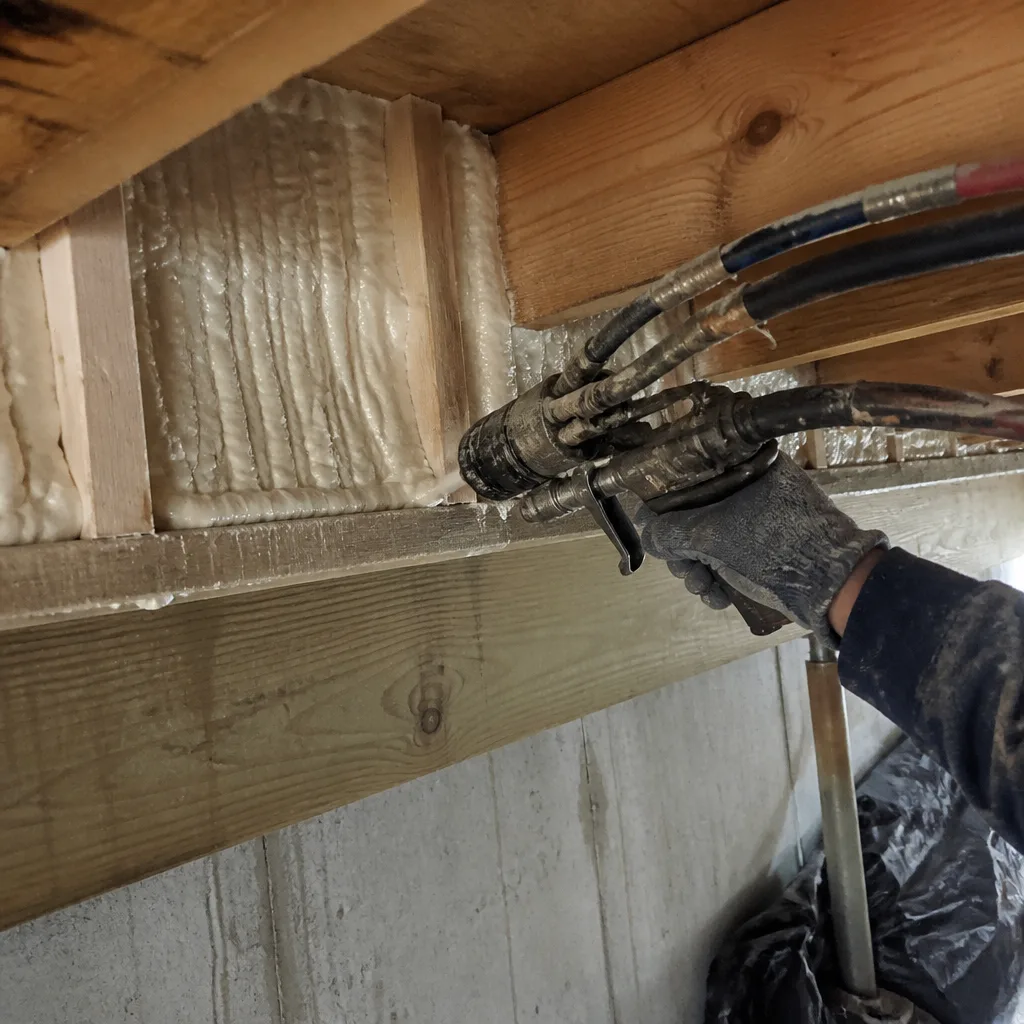
- Adding crawl space insulation (fiberglass, Rockwool, or spray foam) is often cheaper bundled with encapsulation than done later.
- Free estimates let you compare options before committing. Call (855) 798-0822.
Crawl Space Encapsulation & Vapor Barrier Cost Breakdown (2026)
Here’s how the pricing breaks down for the Ontario market. These ranges assume a standard 1,200 to 2,000 square foot crawl space with reasonable access.
| Line Item | Typical Price Range (Ontario, 2026) | What’s Included |
|---|---|---|
| 6-mil vapor barrier (basic) | $1,800 – $3,200 | Ground cover, seams taped, edges secured |
| 12-mil reinforced vapor barrier | $2,600 – $4,400 | Heavier liner, better tear and puncture resistance |
| Full encapsulation (20-mil liner, walls + floor) | $4,500 – $9,000 | Wall-to-floor liner, sealed penetrations, band joist coverage |
| Sub-floor drainage mat | $600 – $1,500 | Channel water to a sump or drain |
| Crawl space dehumidifier (supply + install) | $1,400 – $2,800 | Unit, drain line, and wiring hookup |
| Sump pump (if needed) | $400 – $900 | Pump, basin, discharge line |
| Crawl space insulation (blown-in or batts) | $1,200 – $3,500 | Depends on material and R-value target |
| Mold treatment / remediation prep | $500 – $2,000 | Cleaning before encapsulation |
What pushes cost up? Square footage is the biggest driver. A 2,500 square foot crawl space costs more in material and labor than a 1,200 square foot one. Condition matters just as much. A dry, clean crawl space seals fast. One with standing water, fallen ductwork, or active mold needs prep first. Access is often overlooked. Some Ontario homes have a small scuttle opening, and if we’re crawling through a tight hatch, setup time goes up. Height matters too: a 2-foot clearance means slower work than a 4-foot one.
What pulls cost down? A clean, dry, accessible crawl space with existing drainage. And bundling work. If your attic also needs insulation, doing both in one visit cuts labor.
What Affects Crawl Space Encapsulation & Vapor Barrier Pricing in Ontario
Every crawl space tells a different story. These are the factors that move the number most in Ontario homes.
- Home age and construction type. Lots of Ontario was built up in the 1950s through 1990s, and many of those homes sit on raised foundations with pier-and-beam crawl spaces. Older foundations often have more vents, gaps, and access points to seal, which adds labor versus a newer, tighter build near Ontario Ranch.
- Moisture and drainage. Inland Empire summers are dry, but winter rain and irrigation runoff find their way under houses. Standing water or damp soil usually means adding a drainage mat or sump pump, which pushes a job from barrier-only pricing into encapsulation territory.
- Square footage and clearance. A larger footprint means more liner and more time. Low clearance slows every step. Both are quoted by the square foot and by the hour.
- Vent sealing and air sealing. A true encapsulation closes the crawl space vents and seals penetrations. That’s more work than laying a ground cover, but it’s what actually keeps humid air out during a hot Ontario afternoon.
- Insulation add-ons. Many Ontario homeowners pair encapsulation with crawl space insulation or subfloor insulation. Materials vary: fiberglass from Owens Corning or Johns Manville, Rockwool mineral wool for moisture and fire resistance, or Icynene and Demilec spray foam for a tighter seal. The right choice depends on your crawl space, not a single house product.
- Dehumidifier and mechanical. Sealing the space traps moisture unless you control it. A properly sized dehumidifier with a drain line is often the difference between a crawl space that stays dry for years and one that grows mold again in two summers.
How to Save on Crawl Space Encapsulation & Vapor Barrier
You don’t have to buy every add-on at once. Here’s how Ontario homeowners keep encapsulation costs sensible without cutting corners that matter.
- Start with an inspection, not a guess. A free estimate tells you whether you need a basic barrier or full encapsulation. Sometimes a 12-mil barrier with sealed vents solves the problem at half the price of a full system. Call (855) 798-0822 and we’ll tell you honestly which one fits.
- Bundle with insulation. If your crawl space or attic insulation is aging, doing it during encapsulation saves on labor and setup. Our home insulation services cover every method, so one visit handles both.
- Fix drainage before you seal. Grading, downspout extensions, and redirecting irrigation away from the foundation cost little and prevent water from pooling under the house. Dry soil under a new liner lasts far longer than wet soil.
- Choose the right liner thickness. 6-mil is the minimum and works for dry spaces. If you’re crawling in and out or storing anything down there, 12-mil or 20-mil resists punctures and tears, so you’re not replacing it in a few years.
- Ask about phased work. If budget is tight, barrier first, dehumidifier next season. We’ll lay out a sequence that protects the home at each step.
For the full scope of what encapsulation covers, see our Crawl Space Encapsulation & Vapor Barrier in Ontario page.
Why Crawl Space Encapsulation Matters in Ontario’s Climate
Ontario’s climate is a big reason this work matters. Summer temperatures regularly push past 100°F, and the ground under a raised foundation stays cooler and damper than the air above. When warm, humid air meets that cool soil, condensation forms on joists and subfloor. Over time that moisture rots wood, feeds mold, and makes the first floor feel clammy.
In neighborhoods near the Santa Ana River corridor and older parts of central Ontario, we regularly see joist rot and mold growth traced back to vented crawl spaces that let humid air in but never let it dry. Encapsulation closes those vents and puts a continuous liner between the soil and the house, then controls humidity with a dehumidifier. The result: drier wood, better indoor air, and fewer musty smells upstairs.
The right system depends on your home’s construction, moisture history, and whether you’re adding insulation. We recommend by performance, not by brand contract, which is why we carry eight product lines across fiberglass, mineral wool, and spray foam.
What’s Included in a Professional Encapsulation
It helps to know what you’re paying for. A complete job usually includes:
- Inspection and moisture assessment. We check soil moisture, wood condition, vents, and drainage before quoting.
- Prep and any mold treatment. Cleaning and remediation prep if needed.
- Vent and penetration sealing. Closing crawl space vents and sealing pipe, wiring, and duct penetrations.
- Liner installation. 6-mil to 20-mil liner on the floor and up the walls, with seams taped and secured.
- Drainage. Drainage mat and sump pump if the site needs it.
- Dehumidifier setup. Sizing, install, drain line, and wiring.
- Optional insulation. Subfloor or crawl space wall insulation using the right material for the job.
Safety note: crawl spaces involve confined spaces, electrical wiring, gas lines, and sometimes standing water. If you see damaged wiring, a gas smell, or significant structural issues, call a licensed professional rather than crawling in yourself. Encapsulation is not a weekend DIY project when electrical or gas components are present.
Basic Vapor Barrier vs. Full Encapsulation: Which Do You Need?
A basic vapor barrier lays a moisture-resistant sheet over the crawl space floor. It blocks ground moisture from rising into the house and costs $1,800 to $3,200 in Ontario. Full encapsulation goes further: it lines the walls, seals the vents, and adds humidity control. It costs $4,500 to $9,000 depending on size and add-ons.
If your crawl space is dry, well-drained, and only needs ground moisture blocked, a barrier is often enough. If it’s damp, has mold, standing water, or noticeable humidity upstairs, full encapsulation pays back in comfort and avoids repeat mold problems. A free estimate tells you which one your home actually needs.
FAQ: Crawl Space Encapsulation & Vapor Barrier Cost in Ontario
How much does crawl space encapsulation cost in Ontario in 2026?
Full encapsulation in Ontario typically costs $4,500 to $9,000, and a basic vapor barrier runs $1,800 to $3,200. The range reflects square footage, moisture condition, and whether you add a dehumidifier or drainage. Call (855) 798-0822 for an exact quote – estimates are free.
Is encapsulation cheaper than a vapor barrier?
No. Encapsulation costs more upfront, usually $4,500 to $9,000 versus $1,800 to $3,200 for a barrier. But if your crawl space has moisture, mold, or high humidity, encapsulation solves the root cause while a barrier alone may not. The cheaper option is only cheaper if it fits your situation. Call (855) 798-0822 and we’ll tell you which one you actually need.
How long does encapsulation take?
Most Ontario homes take one to two days. A basic vapor barrier can often be done in a single day. Larger crawl spaces, drainage work, or mold treatment can push it to two or three days. Weather and access affect timing too. Call (855) 798-0822 to schedule.
Do I really need a dehumidifier with encapsulation?
In most Ontario crawl spaces, yes. A dehumidifier adds $1,400 to $2,800 installed. Once the vents are sealed, humid air has nowhere to escape, so you need a way to control moisture. Skipping it often leads to condensation and mold returning within a couple of summers. Call (855) 798-0822 to size the right unit for your space.
Can you come out and give a free estimate?
Yes. Rock Solid Insulation offers free estimates across Ontario and surrounding areas. We’ll inspect the crawl space, check moisture and drainage, and give you a written range with options. Call (855) 798-0822 to schedule. We’ll also flag anything that needs a licensed electrician or plumber before we start.
Get a Free Crawl Space Estimate in Ontario
If your crawl space is damp, musty, or costing you on energy bills, the fix starts with a real inspection and a clear price. We match the method and materials to your home, not to a single product line, whether that means a basic barrier, a full encapsulated system, or encapsulation bundled with new crawl space insulation. Call (855) 798-0822 for a free estimate and we’ll walk you through your options in plain terms.
Pricing reflects the Ontario market as of 2026. Rock Solid Insulation offers free estimates – call (855) 798-0822.
What Our Customers Say
"Installed baffles at the soffits so the new insulation didn't block the ventilation, which the previous contractor apparently never considered."
— Dev Patel"Spray foam in the rim joists in the basement. The cold floors above them are gone."
— Sami Mansour"Work is good and the house is noticeably more comfortable. There was insulation debris left in the hall closet under the attic access that I had to clean up."
— Andres Delgado